Articles
- Home
- Who Invented the CD
- Who Invented the Balloon
- Who Invented Cannons
- Who Invented Bluetooth
- Who Invented Air Conditioning
- Who Invented Blu Ray
- Who Invented Blogs
- Who Invented Arc Lights
- Who Invented the Balance Beam
- Who Invented Boxing
- Who Invented Bowling
- Who Invented the Abacus
- Who Invented Calculus
- Who Invented Boolean Logic
- Who Invented Biometrics
- Who Invented Astrology
- Who Invented Algebra
- Who Invented the Ball and Jack Game
- Who Invented Blackjack
- Who Invented Barbie
- Who Invented the Compass
- Who Invented the Crossbow
- Who Invented the Computer Mouse
- Who Invented the Compound Microscope
- Who Invented the Colt Revolver
- Who Invented the Clothes Dryer
- Who Invented the Clock
- Who Invented the CFL
- Who Invented the Cash Register
- Who Invented the Camera
- Who Invented the Automatic Rifle
- Who Invented the Atomic Clock
- Who Invented the Atomic Bomb
- Who Invented the ATM Machine
- Who Invented the Apple Computer
- Who Invented Cotton Gin
- Who Invented Copy and Paste
- Who Invented Catapults
- Who Invented Cycling
- Who Invented Cricket
- Who Invented the Darwin Awards
- Who Invented Crayons
- Who Invented Colour Television
- Who Invented Chess
- Who Invented Chalk
- Who Invented the Cassette Player
- Who Invented the Christmas Tree
- Who Invented the Broom
- Who Invented Currency
- Who Invented Credit Cards
Who Discovered Venus
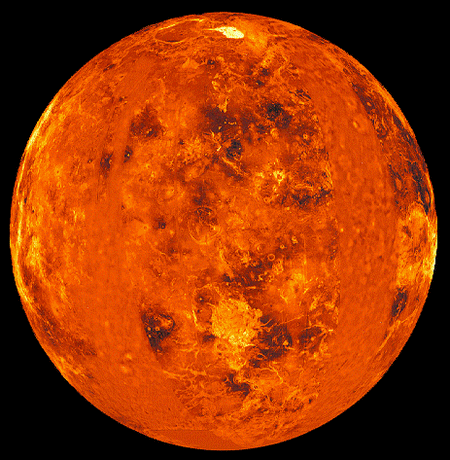
Venus is the earth’s nearest neighbor. Aside taking its name from the Greek god of beauty, Venus is also known as the Evening Star. Venus can be seen in the sky before sunrise and after sunset. Venus is closer to the sun than it is to earth. The 6th largest planet in the solar system, is a rarity: It is the only planet that orbits clockwise. Venus rotates with barely 1% difference.
Earliest sightings of Venus
In ancient Hindu astrology Venus is called Shukra. Meanwhile the Babylonians had observed Venus as early 1600 BC. They called the planet Ishtar, who was the goddess of love and womanhood.
Long before the telescope was invented in the West, Venus known as the wandering star. Westerners thought the morning and late afternoon Venus were two different planets. Phythagoras was the first to know they are one and the same. He discovered that in the 6th Century BC. But he thought Venus goes around planet Earth. In the 17th century Galileo noticed that Venus had traits like the moon: Venus appeared to have lumps on either side and at times took on a crescent shape.

Venus observers
Mikhail Lomonosov, a Russian genius, first discovered Venus’ s atmosphere in 1761. Johann Schroter made further observations of the planet’s atmosphere in 1790. He figured out that when Venus appears as a crescent, its cusps stretches beyond 180 degrees. He was correct in guessing that this caused by sunlight breaking up in a dense atmosphere. Chester Smith Lyman first discovered the ring around dark side of the planet. Venus’ atmosphere is very dense. This causes a problem to scientists who want to know the planet’s rotation period. Giovanni Cassini and Johan Schroter thought Venus had a 24-hour rotation period.

Venus and Earth
Venus shares some traits with planet Earth. Like Earth, Venus has silicon rocks on its surface. That is why Venus is considered as Earth’s sister planet. Venus is like Earth in terms of size and makeup. But Venus’s atmosphere is too dense to host any life form: it is full of sulfuric acid clouds. The extreme heat of the atmosphere dries up all bodies of water. The burning temperature is caused by huge amounts of carbon dioxide and sulfur dioxide. Venus’s surface is far hotter than Mercury’s. Mercury is closer to the sun than Venus. Venus’s atmospheric pressure is 90 times stronger than Earth’s.
Majority of Venues’ surface features are named after women.
Moreover, Venus and Earth has the same core that is made up of compact iron deposits. But Venus’ mantle is riddled with thawed out rock formations. The center of Venus is very similar to that of Earth.
Space missions to Venus
The first space probe mission to Venus was the Russian Venera 1. But Earthly contact was lost seven days after it went into space. The first spacecraft that successfully came close to Venus was America’s Mariner 2. It did so in 1962. Since then Venus has been visited by more than 20 spacecrafts.
Related Articles:
Who Discovered Saturn
In the same manner that Gemini and most constellations were not discovered, Saturn has no known discoverer, either. Saturn and the rest of visible and partially seen space objects have been known by man since prehistoric times. Saturn’s rings were not seen, until the telescope was invented.
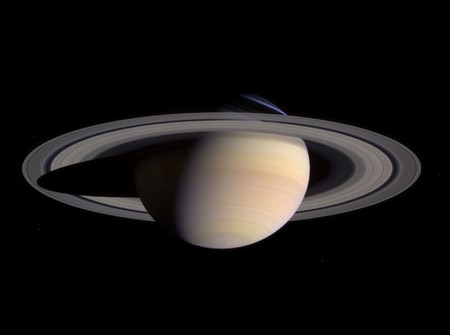
On a clear night Saturn is easily visible in the sky. The ancient Greeks named planet Saturn after their god of time and agriculture. Saturn’s rings were not known until 1655. Galileo saw them first. What he saw first in fact were two humps on both sides of the planet. Christian Huygens later found out they were rings.

How Galileo and Huygens saw Saturn
Galileo set out to study Saturn quite confused. He was not sure whether Saturn was one planet in three or three planets in one. Christian Huygens picked up where he left off. He cleared up the mystery of the rings in 1655. What Galileo mistook for globes Huygens proved to be rings. They did not appear as sharp and distinct as they are seen today, but Huygens was at least correct. Huygens saw Saturn’s largest moon, Titan, in 1655. Saturn’s rings were clearly understood twenty years forward when Domenico Cassini came around. He proposed that Saturn’s rings are broken in many parts.
By 1800 Saturn’s six other satellites were discovered by other unnamed astronomers.
Saturn today
More than 40 of Saturn’s moons have been named since then. But Saturn remains a lethal planet: it is 97% hydrogen, 2.5 % helium, and the rest is ammonia. For its size no one even suspect that Saturn is the least dense of all the planets in the solar system. Saturn is even lighter than water!
New space discoveries are made almost every day. Today, deep space is no longer as mysterious as it was thousands of years ago.

There is an ongoing space mission to Saturn to this day. Spacecraft Voyager has taken close-up images of Saturn and its rings. The photographs reveal the huge gaps between the rings. The gaps are called the Encke Division and Cassini Division. The latest images on Saturn’s moon, Titan, were taken by NASA’s Cassini orbiter. The pictures show that there is organic stuff found on the planet’s surface.
But unlike organic molecules found on a planet like Earth, Saturn’s Titan cannot support any life form. Titan’s temperature is below 180 C. Aside from that, there is no sign of water and oxygen, either. But experts say it is possible that Titan and Earth’s atmosphere may have been the same 4 billions years ago.
Saturn’s companion moons
In 2005 NASA’s Cassini-Huygens mission took a much sharper picture of Saturn’s surface and moons. And this was what it showed: Saturn has other moons that appear like a rubble pile; frequent violent storms on the planet; and a powerful magnetosphere. Saturn’s moons are like giant corks when seen from the spacecraft.
Just when Earthlings thought they have known enough Saturn moons, another small moon was seen about 5 kilometers across. The moon was named Polydeuces, meaning “companion” or “Trojan” moon. This makes Saturn the only planet to have companion moons.
Related Articles:
Who Discovered the Mitochondria
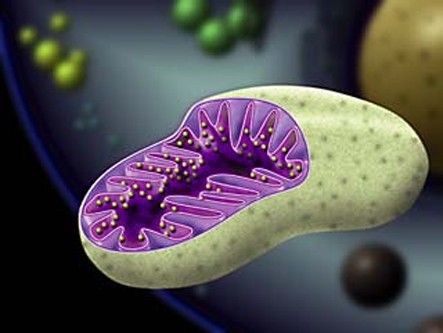
Mitochondria are the powerhouse of the cell. You can say supplies electricity the cell. Mitochondria are organelles in the cells that have special functions: They make ATP (adenosine triphosphate) that keeps the cells in good running condition. Other than that, mitochondria are responsible for cell reproduction and cell death.
Earliest studies on the mitochondria
The first recorded study ever made in the mitochondria was made by Richard Altman in 1840. He came to know about them and called them bioblasts. Carl Benda coined the word mitochondrria in 1898. He got it from the Greek word mitos, meaning thread, and chondros, meaning granule.
Albert von Kolliker discovered the existence of mitochondria around 1857. He was studying human muscle cells when he noted strange granules in them.

Discovery of mitochondria functions
Over the next few decades more scientists took the mitochondria seriously. By and large each one of them had his own contribution to the field. Some focused on mitochondria’s functions, some on their structures. One important name in mitochondria’ science is Otto Heinrich Warburg. He initially proposed that a special enzyme within the cell helps in the making of oxygen. When he used cyanide on the cells, it had an effect right down to the minutest level. In later years he was able to come up with a cure for cancer (cesium chloride). But he was called names by the scientific community.

More research on the mitochondria was undertaken by David Keilin in 1923. He probed how electrons changed inside cells while in the process of oxidation. For his part Keilin discovered the inner membrane of mitochondria, which he called cytochrome C.
Six years later, C.H. Fiske and Y. Subbarow successfully isolated mitochondria’s ATP. Soon after more related experiments were made by H.M. Kalckar and V A Belitser. They proved how cells “breathe” better when added with phosphate and protein. Cells breathe when they get oxygen from the blood. Fiske and Subbarow later called this process as oxydative phosphoryaltion.
By the 1950s studies on mitochondria were going full swing. This time more attention was given to their functions. These were successfully observed by Eugene Kennedy and Albert Lehnigher. Peter D. Michell came up with a theory which he aptly called “chemiosmotics” from his studies on mitochondria membranes. He proved that during cell respiration, hydrogen ions spread across mitochondria’s membranes and that they actually convert food into ATP to make energy.
Paul Boyer discovered the mitochondria’s role in making ATP from inorganic phosphates. For that he won the Nobel Prize in 1997.
Mitochondria’s outer and inner structure
There are membranes outside and inside the mitochondria. The outer layer is thick and full of proteins. It allows only small molecules. Mitochondria’s inner membrane has folds called cristae. Moreover, the inner membrane has an enzyme that helps the cell to make ATP. This enzyme is known as the matrix.
Mitochondria and modern medicine
Knowing mitochondria’s structure helps scientists know more about the DNA. Experts believe there is a link between DNA and mitochondria. DNAs with defective mitochondria, for example, give doctors a clue what diseases a certain person is prone to.
Related Articles:
Who Discovered Mercury
The earliest record about planet Mercury is found in Babylonian and Sumerian writings about 3000 years ago. There is also mention of Mercury in ancient China, India, and in the tombs of Egypt. The evidence dates back to 1500 years BC. Mercury is hard to see because it does not go far from the sun. This was the same problem that ancient astronomers faced.
Ancient Greeks called Mercury by two names: Apollo and Hermes. The Romans gave the planet its present name because Mercury is observed to move fast before dawn and after sunset.

Mercury’s new “discoverers”
But in recent history it was Johann Hieronymus Schroeter who is believed to have first observed the planet. He patiently drew Mercury’s surface and kept a record of his notes. Schroeter continued to observe the planet until his death in 1816. However, by today’s standards, his illustrations are thought incorrect.
Percival Lowell and Schia also saw the same dark streaks on Mercury’s surface. They thought those were the same canals that were seen on planet Mars. Using a much stronger telescope, Eugenios Antoniadi was able to map out Mercury’s surface in sharper detail. His maps were so precise that they were used for the next 50 years. The so-called Martian canals turned out to be optical illusions.
Today images of Mercury are taken by Mariner 10.

Mercury’s surface
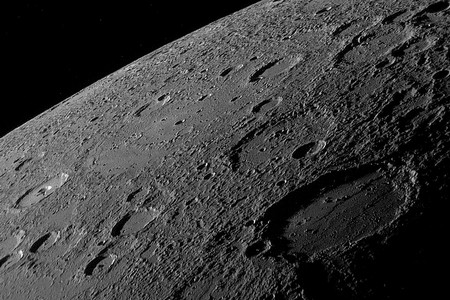
Mercury is a harsh and hot planet. There is evidence of a battered past on the surface of the planet. Mercury was probably caught up in the middle of chaos during the Big Bang. There are huge craters across the planet’s surface. Traces of lava flow are found around these craters. Mercury’s biggest crater is called Beethoven. It measures 643 kilometers in diameter. The largest feature on the planet is the Caloris Basin. It is 1300 kilometers in diameter. Experts believe it was formed by the crashing of a gigantic object into Mercury. In spite of being hot, Mercury has craters with ice in them. This is so because the sun cannot reach some parts when the planet orbits and tilts.
Mercury’s present and future
Mercury has no atmosphere. Between the coldest and hottest parts, the temperature difference is 600 degrees. Mercury orbits around the sun for 88 days but takes 58 days to go around once. Compared with Earth time, a year on Mercury lasts for a day and a half. Mercury is the nearest planet to the sun as well as the smallest planet in the solar system. As a dry and airless planet, Mercury is too small for gravity. Its small size does not allow any atmosphere to form for long. But traces of helium, sodium, calcium, oxygen, and potassium are found on the planet’s surface.
Moreover, Mercury’s heat burns its already thin atmosphere. Mysteriously, it is always replaced. The sun hits Mercury seven times strong as it hits Earth. The sun appears more than twice its size in Mercury’s sky than it does on Earth.
Mercury has no moons. When the sun reaches its last days, Mercury will burn with it, including planet Earth.
Related Articles:
Who Discovered Planet Mars
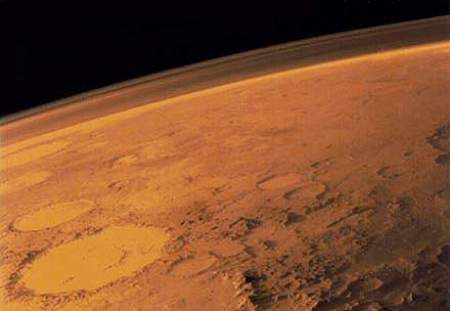
Mars is the fourth planet from the sun. It is also called the Red Planet. Mars turns red because of huge iron dust deposits on its surface.
Mars’ many names in the past
In the old days Egyptians called Mars as “Har Deucher” (The Red One). The Babylonians called Mars as “Nergal” (The Star of Death). The Greeks named Mars after Ares, the god of war. The Romans gave Mars its present name.
Scars on Mars
The strange-looking scars on Mars’ surface was first seen by Christian Huygens in 1659. He actually believed there were creatures living on the planet. The odd-looking figures were later named Syrtis Major. But Giovanni Schiaparelli had a stranger theory: He believed these crooked lines were water canals built by aliens!

No one never really discovered planet Mars. But its moons were first seen in 1877 by Asaph Hall. He named the two moons of Mars Phobos and Deimos. Phobos means fear, Deimos means panic. Hall named the moons after the horses that drew the chariot of Mars in Roman mythology.
Earth’s closest neighbor
Mars goes around its axis once every 24 hours and 37 minutes. It turns around its orbit within pretty much the same time as planet Earth does. Mars’s air is very thin and is almost entirely made up of carbon dioxide. There are times a cloud of dust covers much of the planet. It is noteworthy that there are many striking similarities between Mars and Earth. Like Earth, Mars is also home to wide canyons, snow-capped mountains, and sand banks.
Earth and Mars
Mars and Earth orbit around the sun almost at the same speed. A Martian day is almost as long as an Earthling day (about 24 hours and 39 minutes). In that case, a year on Mars is almost as long as a year on Earth. The Earth has one moon, while Mars has two. Mars’s moons are called Deimos and Phobos. Phobos is a weird moon: It rises and sets for only about 11 hours. It sets in the east and rises in the west. Deimos, meanwhile, rises in the east and sets in the west for more than two days.

Shades of light and dark
The Red Planet was first seen up close from Mariner 4 in 1965. Mars was widely believed to have seas and oceans. Scientists thought this was possible because of light and dark shades on the planet’s polar latitudes. Their observations were later proven wrong. The dark stripes seen from Mariner 4 turned out to be an optical illusion. The other tell-tale sign that there might be life on Mars is the changing colors on its surface. Observers take this for seasonal changes that affect vegetation on the planet: Plants die out in warm months and grow back in cold months.
Water in Mars
But recent radar feeds from Mars Express and Mars Reconnaissance show that Mars harbors water. The photographs reveal bodies of water and ice at the planet’s poles. In 2008 the Phoenix Mars Lander took water samples from Martian soil. According to biologists, Mars sanitizes its own atmosphere. This happens because of the strong solar ultraviolet radiation on Mars’s surface. This leaves the planet’s soil too dry to support any life form. But the issue of an extinct Martian civilization remains a hotly debated subject.
Mars is around 228 million kilometers away from the sun. If it drifted anything closer than that, the planet could have burnt out a long time ago.
Related Articles:
Who Discovered DNA
You can look at the DNA as a set of codes. These codes contain information that we have inherited from our mother and father. The DNA contains protein codes that decide how tall or dark you will be, or how long you will live. Well, almost.
Who discovered the DNA
DNA is short for deoxyribonucleic acid. The discovery of DNA came about as the high point of James Watson’s and Francis Crick’s research. Another important name that comes up is Rosalind Franklin.
Studies on the DNA were done as early as the 1950s by Nobel laureate Linus Pauling. While stationed at the California Institute of Technology, Pauling proposed a prototype DNA model. In England around the same time, James Watson and Francis Crick were studying the structure of hemoglobin, and not the DNA. Meanwhile, at King’s College in London, Maurice Williams was studying the DNA molecule, but he needed an x-ray expert. The role was easily filled in by Rosalind Franklin. She shared her expertise on a mathematical model of the DNA. Two years later a full model of the DNA was presented publicly by Watson and Crick. Rosalind Franklin seemed to have disappeared in the background after that.

DNA and our gene pool
DNA is passed on 50/50 from our parents. The DNA we get from our parents comes in two forms: Genotype (the genetic information), and phenotype (the visible physical traits). When you consider these two, you can somehow tell what offspring you will likely have. Going by either one could be confusing (there is such a thing as recessive genes-traits that remain dormant over a certain time). Remember, too, that genes do not literally combine. Genes are passed on unbroken from generation to generation, depending on which side is the strongest. That is why some traits show up in one generation and disappear in the next. Strangely enough, traits that are not needed by the person for survival are “repressed”. But they do not completely disappear.

Uses of the DNA
Aside from being the imprint of our parents, thus giving us and doctors an idea of our possible diseases, the DNA can be used in many ways. Scientists use the DNA to study plant, animal, and human genetics in order to improve their conditions. Cloning easily comes to mind, but there are positive aspects to it, for example, stem cell therapy in curing cancer. In any major organ transplant, the DNA of the donor and the receiver should match. There is where DNA science plays a vital role.
Your DNA sequence being uniquely yours alone, this has helped solve countless criminal cases. DNA identification is a science in itself in that police investigators cannot take it for granted in going after fugitives.
J Craig Venter’s Human Genome Project
J Craig Venter has been able to decode the sequence of the DNA. He is the brains behind the Human Genome Project. J Craig Venter initially worked with the US government in identifying the 20, 000 – 25, 000 genes making up the DNA. In less than 3 years he was able to identify the 24, 000 genes in humans. His study showed that our genes have twice the range of roundworms and the same as that of mice.
To settle all issues of race once and for all, J Craig Venter has proved that all humans have the same genetic make up (99.99%). Racial variations such as skin color, build, etc, are genetically pointless. This means we all came from the same ancestral mother.
Related Articles:
Who Discovered Planet Earth
To discover Earth, you have to be coming from outside the planet. So far no one has come out and say Earth had been discovered by aliens. The fact is, Earth has been here for the longest time. The planet has been here far longer than humans have.
Earth according to the ancients
Earth being the third planet from the sun is said to have been known by the ancient Egyptians, Greeks, and Sumerians. Ancient humans in other parts of the world, on the other hand, thought the Earth was at the center of the universe. They believed planets, stars, suns, and moons spin around the Earth. The Vikings and Arabs thought the Earth was flat.
If you step outside of your house at night, you would feel the same way, too. But astronomers in the past faced a few problems. They noticed that some planets did not move in a straight trail. Some would stop, others moved backwards. Still others would move back and forth. Ptolemy thus concluded that the other planets orbited inside little spheres. In turn these sphere revolved around the Earth.

Earth according to Copernicus and Galileo
Nicolaus Copernicus came up with the heliocentric model of the solar system in the 16th century. He proposed that the Earth and the planets revolved around the sun instead. He based his observations on Galileo’s model. Galileo observed that Jupiter had its own moons and Venus had the same phases as the moon.

Earth as we know it today
Recently a team of scientists from McGill University in Canada have discovered the oldest rocks on the planet. They said knowing how old the rocks were would tell them just how planet Earth began. They dug up the rocks in Quebec. The rocks were said to be 4.28 billion years old. This brings the age of the planet 300 million years older than is commonly known. According to Jonathan O’Neil, a geologist at McGill University, the rocks show that continents formed on the planet much earlier that what is widely assumed.
The Earth is a weird planet. It is the only planet in the Solar System that has an active plate tectonics. While it does not ring a positive recall, plate tectonics serves a purpose. Plate tectonics brings up carbon-rich plants from the bottom of the oceans. Every time tectonic plates shift and overlie each other, these micro-organisms rise to the surface and cushion greenhouse effect.
Contrary to popular belief, the Earth is mainly made up of iron, oxygen, and silicon. Most iron deposits are found deep at the Earth’s core. It is said to be 88% iron. That is why Earth’s core holds things together on the surface. The planet’s crust is 47% oxygen.
Earth’s other name is the blue planet, for good measure: 70% of the planet is covered with water. And it is not true either that an Earth day lasts 24 hours. The exact Earthling day lasts 23 hours, 56 minutes and 4 seconds. Astronomers call one Earth day as sidereal day. It is the time it takes the planet to orbit its axis.
It is said the Earth has another 5 billion years to live, beyond which it will turn into a burnt out planet, along with the sun.
Related Articles:
Who Discovered Heart Disease
Unless you have an enlarged heart, your heart is as big as your fist. The heart is a major organ that pumps blood throughout the body. The normal heartbeat is 70 times a minute.
Heart-related diseases kill thousands around the world everyday. It is not only humans who suffer heart diseases. Animals can have cardiac arrests, too.
Earliest studies on heart diseases
The human heart has been studied for thousands of years. The earliest medical records of heart disease date back to ancient Egypt. In ancient Egyptian religion the human heart was believed to be the seat of the soul, and thus life. The Egyptians thought that there are channels in the heart through which other fluids pass.

Around the 14th century studies of common heart ailments were made in England. Medieval English doctors found out that few people died of heart-related diseases at that time. Their studies showed that the English ate less carbohydrates-based food. They had a diet rich in proteins instead.
Common heart diseases
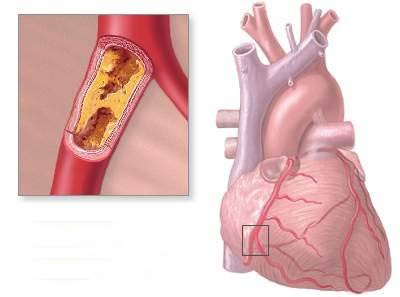
Having a heart disease means blood supply is blocked somewhere in your heart. This is a result of fats building up in and around your heart’s arteries. As time goes by the walls of your arteries turn fatty. So blood cannot flow freely to the other chambers of the heart. The fat deposit build up is called atherosclerosis. The fat deposits are called atheroma. When the blood supply to heart thins out, you get angina. This results in frequent chest pains.
A worst case scenario is having a heart attack. This happens when an artery is fully blocked. Another word for cardiac arrest is myocardial infarction.

Symptoms of heart diseases
Aside from frequent chest pains and running short of breath, you can have irregular heartbeats, too. When it gets a bit more frequent and harder it is called palpitations. Too much exhaustion from doing highly physical stuff like playing basketball, jogging, and swimming, can lead to heart failure. Heart failure happens when your heart is too weak to pump blood into your lungs.
On the other hand, angina makes you feel like you are having indigestion. It brings a stiffness to the center of your chest which later spreads to you stomach, neck, and back.
Symptoms of a heart attack
Having a heart attack is initially like having angina. More than that, you would have any or all of these signs: running short of breath, sweating, and nausea. But unlike angina, a heart attack can only get worse in time.
How to avoid having heart diseases
Experts say a heart disease is a lifestyle issue. So far the most acceptable advice is to lower your intake of bad cholesterol-laden food.
- Check what you put in your mouth. Have a balanced diet rich in fish oil such as salmon, herring, mackerel, sardines, and other sea foods. Fish oil puts you away from risk of having thrombosis.
- Vegetables stop saturated fats from turning cholesterol. And you can never have an overdose on vegetables. Beans, oats, nuts, fiber, and legumes lower cholesterol levels by leaps and bounds.
- Get physical. Your heart needs oxygen. So you need to do a cardiovascular exercise for at least 30 minutes a every day. You will notice that the longer and more frequent you do this, the better you will feel. Cardiovascular exercise increases your good cholesterol level and burns your calories, too.
- Quite smoking. Smoking hardens your heart’s arteries. Chain smokers double their chances of having thrombosis at an early age.
- Cut back on alcohol. Stick to common wisdom: A couple of beers is fine, anything more than that may cause you harm in the long run.
Finally, love life. It keeps your heart pumping. Studies show that people who love and are loved, live long.
Related Articles:
Who Discovered Influenza
You can take influenza, literally. It came from an Italian word meaning influence. Influenza is very infectious. It infects mammals, birds, and humans. The influenza virus is spread through air and any form of body contact.
The earliest records of Influenza symptoms
This viral disease is as old as human evolution. The most believable account of how it began is the theory that it must have occurred when humans started owning animals. Hence, the animal to human path of infection. Ancient Greek doctor Hippocrates kept the first record of influenza symptoms around 2400 years ago. Herodotus, the ancient Greek historian, observed the same thing, too, around the same time.

Influenza in the Middle Ages
In Eastern Europe the first influenza epidemic was recorded in the 1580s. Experts believe it began in Russia and later spread out to Central Europe and Africa. The epidemic killed hundreds of thousands. While he was treating patients coming down with Spanish flu in 1918, Dr. J.S. Koen noted that human and pig influenza symptoms were the same.
Influenza in the 20th Century
It was not until 1931 that the orthomyxoviridae strain of the virus was discovered. The strain was first observed by Richard Shope. Dr. Shope started by studying influenza symptoms in pigs in 1928 with N. McBryde. But Dr. Mc Bryde gave up untimely. Dr. Shopes carried on all by himself. He took mucus samples from infected pigs. Then he infected healthy pigs with the virus. Dr. Shope then proved that influenza was caused by a virus.

Meanwhile, a British team led by Dr. Patrick Laidlaw was able to isolate the influenza virus from humans in 1933. In 1944 the first successful attempt at making a cure for influenza was done by Thomas Francis Jr. and a team of experts from the University of Michigan. They based their work on an earlier experiment by Frank Macfarlane Burnet. Burnet found out that when he cultured the influenza virus in a fertilized chicken egg, it could not infect.
The three main types of Influenza viruses
Influenza virus has three types: A. B, and C. Of all the types, A is the most flexible. It can thrive anywhere. At present there are about 15 HA serotypes and 9 NA serotypes. Because the virus continues to mutate, unknown subtypes already exist.
Type B influenza infects only mammals and is less virulent than Type A. Type B has no known serotypes. Type C virus infects humans but rarely causes a serious disease. Neither has it any known serotypes.
Traits of Influenza virus
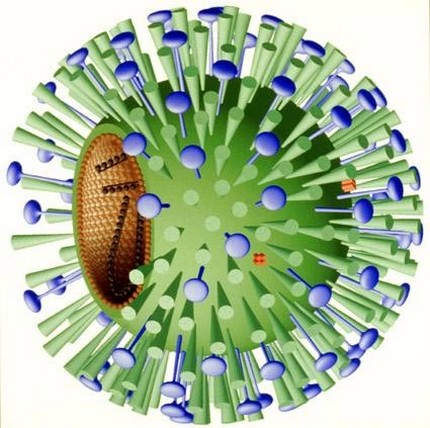
The influenza virus is about 80 to 120 nanometers in diameter. It is therefore extremely small. Under the microscope it appears spherical, sometimes appearing as a very small filament. The virus’s outer side has a fatty layer that is covered with glycoprotein spikes. There is a line of proteins deep in the fatty layer.
Influenza epidemics in the modern times
Compared with epidemics in the past, modern flu epidemics are less deadly and massive in scale. Modern medicine has done so much to stop the spread of virulent virus. However, some of the worst flu epidemics that happened within the last century were the Asian Flu of 1957, the Hong Kong Flu of 1968, and the great Swine Flu of New Jersey in 1976. Russia had its share in 1977.
The latest flu epidemic to scare the world is the H1N1 virus. So far studies about its origins remain unclear.
Related Articles:
Who Discovered Leukemia
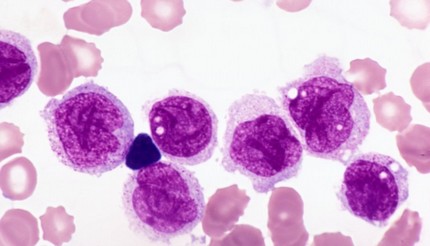
Leukemia is one of the most feared diseases today. The mere mention of it could cause some people to faint. You see, leukemia is another word for blood cancer. It is a sickness in which mutated blood cells increase and damage other healthy cells. In the process the “mutant” white blood cells seize the red blood cells. It results in oxygen shortage throughout the body. In a serious stage, this later results in multiple organ failure.
Who discovered leukemia
Once more, the Greeks are said to be the first discoverers of cancer way back in the 4th or 5th Century BCE. The oldest proof of the presence of cancer was found by Louis Leakey in Kenya in 1932. Leakey found a mandible with tumor.

But leukemia as cancer was not known until 1845. It was diagnosed by Dr. John Hughes Benett to a patient of his in Edinburgh, Scotland. Bennett called the disease leucocythaemia. Around the 19th Century European doctors had started to observe abnormal levels of white blood cells in patients. Lacking a common name for it, they called the disease “weisses blut”, meaning white blood. Some popular names that were associated with that discovery where Rudolph Vurchow (who coined the name “weisses blut”), Alfred Velkpeau, and Paul Ehrlich. In 1872 Ernst Neuman observed the leukemia infected the bone marrow, too.
Around 1913, leukemia had already been recognized as well as its four types: erythroleukemia, acute lymphocytic leukemia, chirnic myelogenous leukemia, and chronic lymphocytic leukemia. At the time leukemia was thought an incurable disease. In 1970 it was found out that some patients could be cured of leukemia. By the 1980s and 90s, more and more patients suffering from leukemia were cured. The figures of cured patients were at 70 %.

General types of leukemia
Cancer of the blood has many types. The type depends on what group it belongs to. The two general groups are acute and chronic. Under the acute type, there is the acute myelogenous leukemia (AML), and acute lymphoblastic leukemia. Under chronic leukemia, there is the acute myelogenous leukemia and chronic lymphocytic leukemia.
Over the decades more and more people catch cancer for one reason or another. On the flipside, more patients get cured of cancer than in the past. Before the 60s, cancer was considered the end stage of a sickness, and even doctors thought only a miracle could save a patient with cancer.
One vital reason for the rapid advance of cancer cure is early detection of mutating cells. A certain Dr. William Harvey pioneered studies on knowing the circulatory system of the blood.
Your Lifestyle and leukemia
As in most diseases today, having blood cancer is a lifestyle issue. It is observed that leukemia is more common in highly developed counties than in developing counties. It comes down to issues on hygiene, experts point out. Families living in rich counties are usually smaller and have far cleaner public spaces. Naturally their immune system does not respond as well to infections as those who live in less “sheltered” conditions. It does not mean you should seek out the wilds or live in a dirty environment. Keep in mind that leukemia can be avoided by developing a strong resistance to carcinogens and living a healthy lifestyle, one that is free from processed foods.
Common leukemia treatments
In ancient times, a poison was used to cure leukemia. Hippocrates and the Hindus used arsenic to cure leukemia. Thomas Fowler made a solution of arsenic trioxide and potassium bicarbonate in the 18th century. Until the first few decades of the 20th Century arsenic was widely used to stop mutating white blood cells. With the coming of radiation therapy, arsenic fell out of favor.
Leukemia remains a serious medical condition even today. Sometimes leukemia is discovered at a much later time. There are “artificial” and “natural” cures. A so-called biological treatment makes use of non-harmful drugs such as Interferon. It does not kill healthy cells but pumps up the body’s own immune system instead.
On the other hand, a bone marrow transplant is the most popular (but is the costliest) cure. This is done when a patient goes through a remission after a treatment. The patient is supposed to receive a new bone marrow so he or she can stand chemotherapy drugs. As with chemotherapy, the backlash is that this also kills healthy cells. This is a long process and much depends on the patient’s own immune system.
In the end, there is no substitute to a healthy lifestyle.
Related Articles:
« Previous Entries Next Entries »