Articles


Subscribe to RSS feed

Who Invented the Breathalyzer

A breathalyzer is a device that is used to calculate or estimate BAC or the blood alcohol content from the breath of a person. The origin and first development of the breathalyzer was in the year 1927 when Emil Borgan came out with an experiment with air in a football. It led to the discovery of the fact that 2 liters of air had more alcoholic content than 1 cc of urine. In the year 1938, professor Harger came up with the first drunkometer which used a balloon for collection of air. Then the air was passed through potassium permanganate solution and the color change indicated alcohol in breath.

Dr. Robert Borkenstein, professor of Indiana University, in the year 1954 developed the first breathalyzer. It measured the level of alcohol in the blood of a person at the time of taking the breath sample. After many decades of technology transformation, the breathalyzerhas underwent many changes and is used by law enforcing body and police excessively. Since the results are immediate, actions are easy for the police and law bodies. Many countries have specified and approved breathalyzer devices that can be used as evidence and testing by law enforcing bodies.

Who Invented the Breathalyzer

Related Articles:

Who Invented Chemotherapy

Chemotherapy was invented by Alfred Gilman and Louis S. Goodman who were hired by the U.S department of Defense to research upon the use of nitrogen mustard as a healing agent. Nitrogen gas was a chemical used in the Second World War to attack enemies resulting in severe burns. Gradual studies pointed out that people exposed to nitrogen gas had a low count of white blood cells. This discovery led to the research of the use of Nitrogen gas as a cure for cancer. It was established after the research that such chemical agents could help provide temporary relief to lymphoma patients.

Antifolates were another step that utilized drugs to treat cancer. Studies indicated that the use of antifolates reduced the growth of cancerous cells in children. Later in 1956, Roy hertz and Min Chui Li introduced methotexrate treatment, which was successful in curing the tumor by chemotherapy. Finally in 1965 combination chemotherapy was discovered for the treatment of cancer.

Who Invented Chemotherapy

The use of drugs and chemical s for medication can be traced back to ancient India. Usage of herbs and metals to treat severe illnesses has been a common practice since then. The main items used for treatment included alcohol, bitumen and tar. A Persian physician called Muhammad Ibn Razi of the 10th century also introduced unconventional substances such as copper, arsenic salts and mercuric salts for treating illnesses.

Related Articles:

Who Invented the Blood Bank

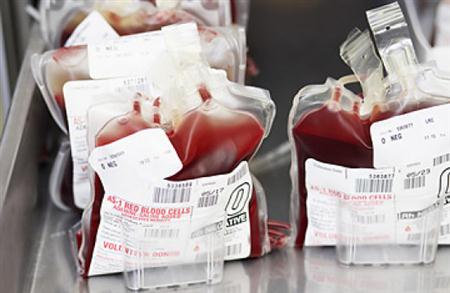
The history of blood back traces back to the First World War. JR Turner and Francis Peyton Rous, with the help of a glucose based compound, first introduced the concept of storing blood for many days. After some more research, Dr. Charles Richard Drew was the first person who studied in detail the transfusion and storing of blood. He opened many blood “depots” or “banks” in the early period of Second World War. However for the opening of the first blood bank according to many sources, an U.S. Army officer Oswald Hope Robertson is credited for the opening of the First World War.

With further developments in the medical facilities for storing of blood, large scale blood storing medical centers were opened by Soviet Union. In the United States of America, the first blood bank was opened by Bernard Fantus. It was considered a major development in blood transfusion as it was the first blood bank with hospital facilities. Later in the 1930’s after the RH blood system was discovered, J.F. Loutit and Patrick L. Mollison introduced the ACD( acid Citrate- dextrose) which further helped in blood transfusion. This in turn led to growth of blood banks and safer transfusion and donation of blood.

Who Invented the Blood Bank

Related Articles:

Who Invented the Band Aid

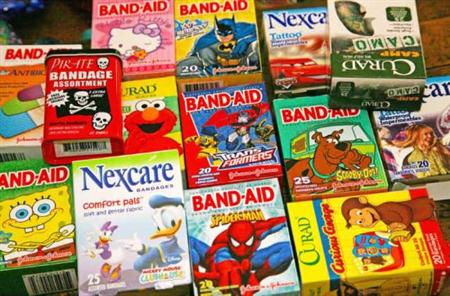
Band-aid is the brand name and product of Johnson & Johnson. It was invented in the year 1920 by one of the employees of Johnson & Johnson, Earle Dickson. Dickson introduced this product for his wife who frequently cut or burn herself while cooking. The product was used by Mrs. Dickson to dress her wounds without any assistance. The inventor resided at New Jersey and he conveyed the idea to his employer. The employer went on to produce this product as Band-Aid and marketed the same. Invention of the product allowed Dickson to attain a successful career at Johnson & Johnson and he retired as Vice president of the company in the year 1957.

The bandages are made with nylon fibres embedded with medical cloth. Cotton is used as absorption pad and this pad is covered with ventilated thin plastic sheets.

Who Invented the Band Aid

The first bandages were hand – made bandages and were not popular. In 1925, the company introduced the machine made bandages in form of sterilized Band-Aids. During World War II, millions of sterilized Band-aids were shipped to medical team and some bandages were shipped to hospitals.

Later, decorative band-aids were introduced in the market. They were designed to represent themes of Superman, Smiley faces, Barbie, Spider-man, batman and other cartoon characters and are a successful product with children across the world.

Related Articles:

Who Invented Body Mass Index

Body mass Index or BMI is a measure of body weight of a person in reference to his height. It tries to explain what should be the actual weight-height ratio of a person and follows an easy method for calculation. It is generally used for calculating whether a person is overweight, ideal weight or underweight. On a large scale, BMI is used to analyze composition of the population of an area, region or country. It was first invented by Adolphe Quetelet, a poly-mathematician somewhere in between 1835-1850.

The formula as invented by Quetelet was body mass in kg’s divided by the square of the height in meters. In 1995, the World Health Organization has introduced a common scale to decide whether a person is underweight or overweight. A person having a BMI of 18.5 or less is considered underweight whereas a person exceeding 25 is considered as overweight. For a score above 30, the person is said to be obese. Most countries follow the BMI scale as decided by W.H.O; however the countries like Japan and Singapore follow their own set of BMI scale. BMI has been used in many medical fields, statistical analysis of data for many decades due to its simplicity in calculation.

Who Invented Body Mass Index

Related Articles:

Who Invented Anaesthesia

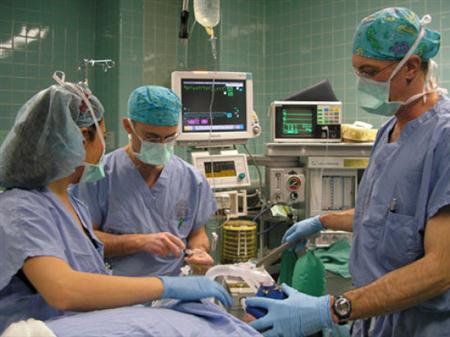
Anesthesia is the most remarkable and renowned discovery in the medical field. It was invented by Alfred Velpeau in the year 1839. It helps a patient slowly drift unconsciousness while still being aware. But it was used by doctor Crawford Williamson Long in the year 1842 for the first time. He used it towards removal of tumour from the back neck of the patient.

It is medically induced on a patient and not resembles either the natural state of analgesia which is the loss of muscle reflexes or amnesia which is decreased response on stress and loss of responsiveness. Inducing anesthesia on a patient allows the patients to undertake the surgery and other clinical procedures without incurring pain.

Who Invented Anaesthesia

It may also be explained as a reversible lack of consciousness that includes both total lack of consciousness as well as partial lack of consciousness. The former refers to general anaesthesia and the latter refers to specific/local anaesthesia like spinal anesthesia.

General anaesthesia inhibits the sensory and sympathetic transmission of nerves at brain level. Local anesthesia restrains the sensory awareness of a specific part of the body for instance tooth. General anesthesia inhibits the larger area of the body by blocking nerves transmission. Regional anesthesia includes spinal and epidural anesthesia.

Related Articles:

Categories