Articles
- Home
- Who Invented the CD
- Who Invented the Balloon
- Who Invented Cannons
- Who Invented Bluetooth
- Who Invented Air Conditioning
- Who Invented Blu Ray
- Who Invented Blogs
- Who Invented Arc Lights
- Who Invented the Balance Beam
- Who Invented Boxing
- Who Invented Bowling
- Who Invented the Abacus
- Who Invented Calculus
- Who Invented Boolean Logic
- Who Invented Biometrics
- Who Invented Astrology
- Who Invented Algebra
- Who Invented the Ball and Jack Game
- Who Invented Blackjack
- Who Invented Barbie
- Who Invented the Compass
- Who Invented the Crossbow
- Who Invented the Computer Mouse
- Who Invented the Compound Microscope
- Who Invented the Colt Revolver
- Who Invented the Clothes Dryer
- Who Invented the Clock
- Who Invented the CFL
- Who Invented the Cash Register
- Who Invented the Camera
- Who Invented the Automatic Rifle
- Who Invented the Atomic Clock
- Who Invented the Atomic Bomb
- Who Invented the ATM Machine
- Who Invented the Apple Computer
- Who Invented Cotton Gin
- Who Invented Copy and Paste
- Who Invented Catapults
- Who Invented Cycling
- Who Invented Cricket
- Who Invented the Darwin Awards
- Who Invented Crayons
- Who Invented Colour Television
- Who Invented Chess
- Who Invented Chalk
- Who Invented the Cassette Player
- Who Invented the Christmas Tree
- Who Invented the Broom
- Who Invented Currency
- Who Invented Credit Cards
Who Invented the Christmas Tree
No Christmas can be complete without a Christmas tree. A Christmas tree can be large or small, decorated or simple, pain or colourful, natural or artificial but is an important aspect of the festival. It is a tradition associated with the celebration of the festival.
The tradition of celebration and decoration has been invented by Martin Luther and few other Lutherian Scholars. In earlier times, fir trees were used for decorative purpose. The tradition of decorating the tree started in Germany during 16th century. The tree was brought home in a traditional war and decorated with lights and candles, garlands, ornaments and many other bright shiny objects. A star or an angel will be placed at the top of the Christmas tree. The idea became most popular in Germany and was soon captured by Britain due to the rivalry between these countries.

In the 19th century, Queen Victoria and Prince Albert posed for an illustration with their family with a Christmas tree. And once the picture was revealed to the public, the custom of decorating the trees spread quickly among the people of Britain as well as U.S and Christmas trees were marketed well during that period.
Indoor Christmas trees with modern decorations are recent development. Neon lights, coloured piece of papers, fabric designs, etc., are added to the natural or artificial tree to make for an attractive Christmas tree.
Related Articles:
Who Invented the Broom
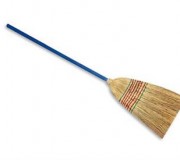
The history of brooms doesn’t have any evidence to credit the invention to a particular person. Brooms have been used in varied materials and forms since man lived in caves. Initially it was animal fur that was tied up to clean up the cooking place and big castles. There are many stories that are associated with the first broom which is believed to be created somewhere around the eighteenth century. The first broom is said to be made in 1797 by a farmer with sorghum. He presented it to his wife who found to be of great help for domestic cleaning. Soon there was demand for the broom in many households and it also triggered the cultivation of sorghum.
After animal fur and sorghum, many leaves and bushes too were tied up and used as brooms in different countries. Brooms in varied forms have been mentioned in many tales and fables specially those relating to witch craft. There have been stories since long about witches flying on brooms or similar objects. In recent times, books like the Harry Potter series have flying brooms used in the narration of the story. Since there are hardly any official records, the first use of brooms can only be guessed upon.

Related Articles:
- No related posts
Who Invented Currency
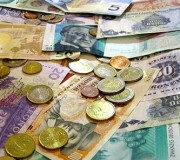
Many specimens of recorded history reveal that Chinese were the first to make use of currency. The use of both coin and paper money can be traced back to China. Around 650 A.D the Emperor of China issued paper tokens with assigned values for general use. The Chinese initially traded in shells and later in coins made out of various natural products such as wood, stone, bone, copper, lead etc. Bronze coins fashioned in many interesting shapes like small knives and spades were also used as currency around 5th century B.C.
A promissory note called the ’flying money’ became quite popular in the Sichuan province of China during the Song Dynasty (960-1279). In 1024 the government appropriated the production of these notes and made them the first official paper money currency in the world. Many forms of paper money became the dominant currency of China by the end of the twelfth century. The Yuan Dynasty (1271-1368) marked the introduction of the first currency which was not backed by any precious metals.

Swedish were the first ones in Europe to issue paper currency in the 17th century. All other European countries followed Sweden and issued paper notes soon after. Stockholms Banco was the first to publish bank notes in Europe in the year 1661.From the 17th-19th century the use of gold coins as currency was prevalent in Europe.
Related Articles:
Who Invented Credit Cards
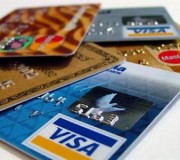
Although individual store credit cards were common in the twentieth century, a credit card that could be used at multiple locations came into existence in 1950 when Frank McNamara invented the Diner’s club credit card.
The beginning of the twentieth century marked a steep rise in the automobile and travel industry enabling easy accessibility to a variety of shopping spots. Many stores and gas stations hence introduced the concept of shopping on credit accounts in an attempt to secure customer loyalty. However this meant that people had to carry a dozen of credit cards to swipe at each store .In order to overcome such inconvenience, Frank McNamara came up with the idea of having a single credit card which could be used at multiple destinations like restaurants, gas-stations and store.

McNamara along with two of his friends started a new company known as the Diners Club in 1950.The Diners club assumed the role of a middleman, who offered credit to individuals on behalf of many companies. The initial credit cards did not bill any interest charges to the subscriber; instead they charged 7% for each transaction to the company to make their profit.
The first lot of Diner’s credit card was distributed to two hundred people and was accepted by fourteen restaurants of New York. Initially, credit cards were not well accepted as the companies didn’t want to pay the Diner club’s fees and individuals hesitated due to the small number of companies accepting the card.
Related Articles:
Who Invented Cosmetics
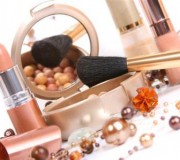
The use of cosmetics as a medium to enhance facial contours can be traced back to as early as 4000B.C.Many evidence indicate towards the fact that the ancient Egyptians were the first to apply cosmetics. It is believed that Egyptians maintained similar standards of beauty to those prevalent in the modern times. The current make-up trends such as application of rogue, eyelid paint, lip colour etc. are all legacies of the ancient Egyptian era.
The use of henna as a means to adorn hand and feet was a common practice amongst the women of Egypt and Mesopotamia. Kohl, which is a derivative of lead ore, was extensively used as an eye shadow and eyeliner to delineate the shape of the eyes. The Egyptian queen Nefertiti was the pioneer who first painted her fingernails and toenails with a red lacquer and gave birth to a fashion which was adopted by multitudes of women over numerous centuries. Men of ancient Egypt too were well attuned with the art of cosmetology. They used castor bean oil as a sunscreen to protect their skin.

Women rapidly took to the use of cosmetics in the centuries that followed despite of being frowned upon at several occasions. Thanks to Hollywood, the demand of cosmetics instantly shot up around the 1920’s.The archetype heroine with the beautifully painted face became an icon of sorts whom every woman wanted to emulate.
Related Articles:
- No related posts
Who Invented the Cardigan
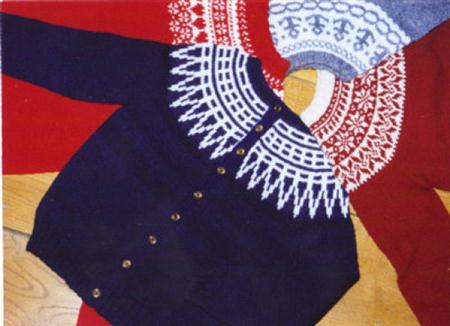
Cardigan is a popular winter wear that is open from the front. It can be closed in the front either with buttons or zips or even tied up with small threads in the front. Cardigans are worn in many countries by both men and women in different styles and patterns.
This winter wear got its name from James Thomas Brudenell who was the 7th Earl of Cardigan. He made his troops wear large knitted jackets which were later known as cardigans. James was largely known in history for his active participation in the Crimean war and Battle or Baraclava. He was known for his exploiting and arrogant nature. He lived an aristocrat’s life before and after his retirement.

Cardigan has been used in some form or the other for many decades. It is easy to wear and can be excellently styled up for semi-formal and casual looks. While pullovers are best options in casuals, many often use cardigans in formal wears. There are many designers and fashion houses that have done wonderful work with cardigans. While heavy woolen cardigans were primary choices for many years, presently many thin fine fabrics in many sporty and classic colors are popular choices.
Related Articles:
- No related posts
Who Invented the Blackboard
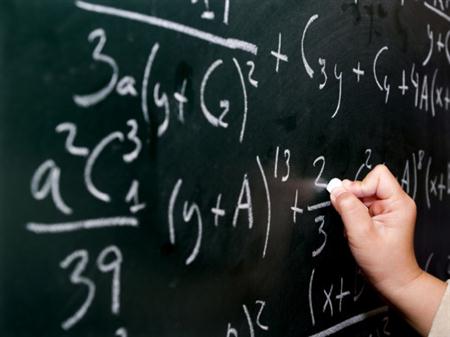
A blackboard also referred to as a chalkboard is a reusable writing surface upon which text or drawings are made with chalk. The boards are generally made of thin and soft sheet of slate stone in black or dark grey. Modern versions of these blackboards are available in green and brown and are referred as green board or brown board.
History of the blackboard can be traced from 18th century. Blackboard was invented by James Pillans in the year 1800 and it was introduced in the US education system in the year 1801. He was a headmaster in a high school at Scotland. Students in the school used slates with wooden frame for writing and the wooden frame protected the slates from breaking. Once, he took the slate and hung it on the walls to teach and this brought him an idea of creating the black board. Mr. George Baron, a Maths teacher carried this idea to US.

Blackboards are still used in teaching, even though their use has been diminished in few wealthier countries. However, blackboards or chalkboards have few disadvantages like they produce dust based on the quality and the amount of chalk used. Many find it causes an allergic reaction, which has lead to decrease in its popularity.
Blackboards are also used at homes, specifically in the kitchen for writing shopping lists, messages, etc. However, these are mostly replaced by white boards in today’s world.
Related Articles:
- No related posts
Who Invented the Bed
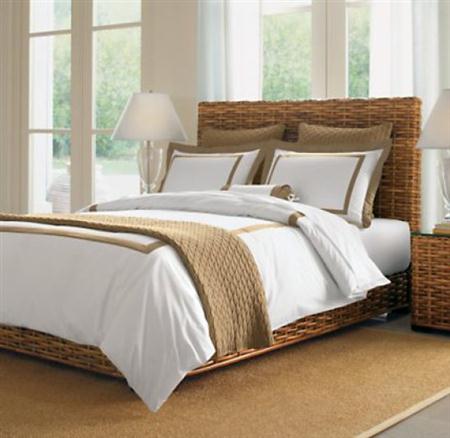
A bed is a small or large piece of furniture upon which a person may sleep, relax or rest. In several cultures over many centuries, bed was recognized as the most important piece of furniture in the house to exhibit a different type of status symbol.
Beds were first used by Egyptians and they used it for several purposes, more than a place of sleeping and relaxing. The beds were used as a place to eat, social entertainment, etc.

An adjustable bed, air bed, bassinet bed for new born infants, box bed, brass bed, water bed, bunk bed, loft bed, captain’s bed, camp bed, canopy bed, curtained bed, day bed, futon, four poster bed, hammock, hid away bed, infant bed also referred to as crib or a cot are different varieties of beds. Some more include iron bed, kang bed, manjaa – a traditional Punjabi bed, Murphy bed or wall bed, pallet – a thin weight less bed, roll away bed, rope bed, platform bed, sofa bed, toddler bed, trundle bed and vibrating bed, are more varieties of beds that makes it clear how versatile and diverse its many uses are.
Folding bed was invented by L. C. Bailey. With the recent developments, beds usually contain a mattress placed on the top of the box with spring base. This spring box extends additional support towards suspension of mattress. William Lawrence Murphy invented the Murphy bed in 1900.
Related Articles:
- No related posts
Who Invented Backpacks
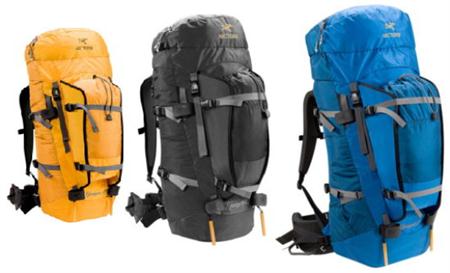
The backpack was invented in the year 1952 by Dick Kelty. Dick Kelty was an active hiker who often faced trouble with carrying his gear during hiking trips. At that time people who enjoyed trekking had to settle for gear sold at military surplus stores. However, they were quite bulky and crude and did not make for a comfortable trekking sack. Kelty was hence inclined to come up with an easier way to carry gear through hikes.
The idea of the backpack clicked Kelty during one his hiking trips in the year 1951.Kelty and his friend slid the end of their pack boards to the rear pockets of their jeans in order to shift the load from their shoulders to hips. They realized that this was a much more comfortable way of carrying their supplies. This new finding stayed on with Kelty and he kept experimenting till he had devised the perfect backpack.

Kelty made many improvisations on the traditional gear to shape a convenient backpack. He added hip belts to the bag for better support .He also substituted the wooden frame with lightweight aluminium and changed the rucksacks to nylon. In the year 1952 he started his small home-based business, achieving a sale of 29 backpacks for $24.00 in the very same year. The growing popularity of hiking and trekking activities by the 1970s boosted the success of Kelty’s backpacks to a great extent. Kelty’s invention is indeed very remarkable.
Related Articles:
- No related posts
Who invented Velcro
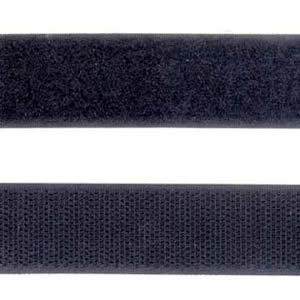
Perhaps the most useful invention of the 20th century, Velcro has become a ubiquitous product used extensively in clothing and the space industry because it attaches items together easily and without messy glues or causing damage. Velcro is a registered trademark of the Velcro Corporation founded by George de Mestral,the inventor of velcro.
Back in 1941, de Mestral was walking around the hills of Commugny in Switzerland with his dog, and when he got home noticed burrs from burdock on his clothes and the fur of his dog. George de Mestral was an engineer by trade and became curious about why the burdock was sticking. Looking at the burrs under a microscope he saw many small hooks that were catching on the loops of the weave of his clothes.

George de Mestral
Inspired, de Mestral imagined a world filled with artificial burdocks that could be used in clothing instead of zippers. Over a ten year period he tried many different ways of producing a hook and loop fastener and was almost about to give up when he discovered that making the nylon hooks became easy when a hot infrared light source was passed over the nylon ends causing them to curl.
Another year passed before George de Mestral finally worked out how to create the loops, which were also made with nylon, but needed to be looped and heat treated to avoid reverting to plain nylon thread again. Unfortunately this invention wasn’t sufficient since the hooks would grab, but not easily let go.
The problem was solved by cutting the top off the loops with a pair of shears and creating a half loop which was springy and would grab the hook, then release with a snapping sound when pulled apart. Thus the invention of the hook and loop fastener was complete.

The name velcro is a made up word that took the vel from the French word velour and the cro from the word crochet. Velcro has entered common use as a generalized word for hook and loop fasteners, and in the English language has even become a verb ‘to velcro’. In the 1950′s when Velcro was first introduced to the market it was advertised as the zipperless zipper.
Since those days George de Mestral’s velcro invention has been used extensively in the space industry, NASA famously used Velcro in the first moon missions to help secure items inside the capsule and as part of the suits astronauts wore. Velcro is also used in the automotive industry to secure carpets, headlining, headrest covers and toolkits.
Related Articles: