Articles


Subscribe to RSS feed

Who Invented the Compound Microscope

Compound microscope is the advanced model of high power microscope developed with multiple and selectable lens of different magnifications. The first compound microscope was invented and patented by Zacharias Janssen in the year 1595. Soon after his invention, Galileo Galilei invented another type of compound microscope out of a telescope. And on the basis of above inventions, several scientists have refined their inventions and introduced advance models of compound microscopes. Compound microscopes are useful for biological research and professional laboratories.

A compound microscope is designed with fittings of convex lenses. The high magnification capacity of these convex lenses enables the detailed study of the cell, tissues and micro organisms. These are widely used in medical research.

Who Invented the Compound Microscope

The light source of the microscope is reflected through a mirror in form of natural light or as a lamp at the base of microscope. The light makes the object focus sharply on the microscope to appear brighter and make the object stand out in contrast.

When an object is focussed through the microscope, the lenses create a real and inverted image of the object inside the focus of ocular lenses. The ocular lenses convert the inverted image and produce an upright image and thus the image is enlarged as seen by the observer.

Related Articles:

Who Invented the Colt Revolver

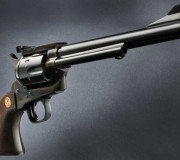
Colt revolver was the first multi shot weapon that became the symbol of American Frontier. Colt revolver was invented by an American Industrialist called Samuel Colt. His innovative contribution to the weapon industry has been described in the army history as ‘events that shaped the destiny of American Firearms’. The inventor was the founder of the Colt’s Manufacturing Company and he got the patent rights for the invention of colt revolver in the year 1836. The basic design of colt revolver has been equipped with a revolving cylinder that contains bullets and cocking device. The revolver works on the basis of cap and ball technology that was developed based on the technology of revolving cylinder invented by Smith and Wesson.

Before the introduction of the colt revolver, single and double barrel pistols were introduced but it was a total failure.

Who Invented the Colt Revolver

The colt revolvers were invented at the right place and at the right time. It was invented during the expansion of America which required defence. The revolver was a simple invention as well as a powerful weapon. The revolver was then improved with a lighter weapon called walker, which was more reliable. With the success of the invention, the inventor developed a new manufacturing company in Hartford, Connecticut.

Related Articles:

Who Invented the Clothes Dryer

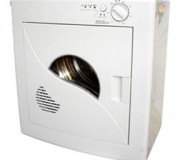
A cloth dryer may also be referred to as a tumble dryer. It is a house hold appliance that is used to remove the moisture content from the clothes after they are cleaned. It was also called a tumble dryer because the ancient dryer consists of a rotating drum called tumbler. The tumbler passes the hot air for circulation and evaporation of the moisture from the clothes loaded.

In the 18th century, clothes dryers were introduced in England and France. Pochon, a French man developed the first and earliest clothes dryer called ventilator. It was a barrel shaped metal drum designed with holes. But the invention was a failure because the clothes lost their quality and softness while drying. And sometime, the colours also faded. For the above reasons and other environmental concerns, the earlier method of clothes drying were dropped.

Who Invented the Clothes Dryer

Patent rights for invention of Clothes dryer was granted to George T. Sampson for his invention in the year 1892. His dryer used the heat from a stove towards drying the clothes and it is similar to ventilator type of machine.

Following the invention of Sampson, electrical clothes dryers were introduced in the year 1915. Clothes are dried with the electronic sensors that produced the heat energy.

Related Articles:

Who Invented the Clock

The word clock has its origin form the French word ’cloche’ which means bell. But an interesting fact is hidden in the origin from which the word clock would have been derived, when compared with the meaning of the word bell. Glocio the Latin word, Clugga the Saxon and Glocke the German word have the same meaning ‘bell’.

Clock is the most prominent amongst the oldest inventions of human. Different types of clocks were invented by different people. History of the clock reveals the usage of sun and water as an instrument of time keeping even 5000 years ago.

Who Invented the Clock

In the year 1577, first minute hand was invented by Jost Burgi. Later, Christian Huygens made an accurate clock in the form of a pendulum in the year 1656. The first mechanical clock was invented in the year 1787 by Levi Hutchins, New Hampshire.

However, the proper clock was invented by an Afro-American called Benjamin Banneker. He invented the clock in the year 1750, when he was 21 years old. Sir Sanford Fleming was greatly recognized towards inventing the standard time in the year 1878.

First quartz clock was invented by Smithsonian in 1927. The clock was developed based on vibrations of quartz crystals that work through an electrical circuit. It was highly accurate when compared to other types of clocks.

Related Articles:

Who Invented the CFL

Edward E.Hammer, an engineer at General Electrics, invented the Compact Fluorescent Lamp, widely known as CFL in 1976. An electric crisis in 1973 is what led to the invention of the CFL. The first linear florescent lamp known as the F-40 Watt Miser was developed thereafter. However the bulb could not be launched in the market at that time, as GE was not in a position to pay the estimated cost of 25 million US dollars for the project. China was the only place where CFL could be mass manufactured at a reasonable price. As GE delayed the launch of CFL many others copied its design and eventually GE was not the first to bring them into the market. It was only in 1995 that CFLs produced in China became commercially available.

A major problem with early CFLs was that the output frequencies of the CFLs clashed with those of some televisions hence causing interference. Corrective steps were taken immediately once the problem was identified. Interference is no longer a problem with current CFLs, however the initial problems resulted in a decline in sales.

Who Invented the CFL

CFLs contain small quantities of mercury as it is the best agent to ignite the lamp through it reaction with phosphorous. However the mercury content in CFLs is an area of concern as it contributes significantly in air and water pollution.

Related Articles:

Who Invented the Cash Register

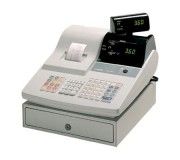
Cash register was first invented in the year 1883 by James Ritty. Ritty, owner of a saloon in the United States, named it after his own name as Ritty model 1 in the year 1879. However he got it patented in the year 1883 with the help of his brother John Ritty. Initially the cash register machines were simple machines for adding. There were no receipts that were generated and still required a lot of manual effort. Ritty later sold his business of cash registers to Jacob H. Eckert who opened up The National Manufacturing Company.

The first cash register with a receipt was built in the year 1884 when Eckert sold off his company to John Patterson. The company too was renamed as National Cash Register. Patterson contributed immensely in the development of cash register as receipts multiplied the popularity of the device. Another major development took place in the year 1906 when Charles F. Kettering, an employee of National Cash register, came up with a cash register that used a motor. There were many efforts in the late 1950s to add me more features to the cash registers. In present era, cash registers have become extremely technical and user-friendly.

Who Invented the Cash Register

Related Articles:

Who Invented the Camera

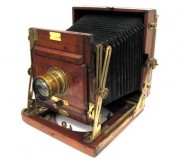
The history of camera dates back to the Greeks when a popular mathematician, Anthemius used an obscura camera in his experiments. The obscura camera was a complex and initial stage of development of camera. It was not possible to carry such cameras everywhere before another mathematician Johannes Kepler added a lens to it. There were other mathematicians who tried to make the obscura camera portable. The first important development was in the year 1685 when Johann Zahn invented a portable obscura camera.

The images could not be stored before 1826 when Joseph Nicéphore Niépce made the first permanent photograph. He used the discovery of Johann Heinrich Schultz in 1724 that chalk and silver mixture darkens on exposure to light. There were also many important events in the developing of an image from 1840s to 1890s. The most important development was in the year 1861 when James Clerk Maxwell and Thomas Sutton worked together to make the first color photograph in history. In the early 1920’s the first video camera tube was invented. Soon after, still cameras were invented and were much more compact. Now digital cameras have changed the face of camera functions completely with a wide range of features that have reformed photography.

Who Invented the Camera

Related Articles:

Who Invented the Automatic Rifle

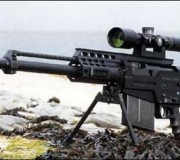
The automatic rifle was designed by Mexican military officer Manuel Mondragon. Mondragon started his work on the rifle in the year 1882 and patented it in 1887.The rifle was a gas-operated device and featured a piston and cylinder arrangement which was very unusual at that time. The rifle was initially named ‘The Mondragon’ after its inventor and later became popular as M-1908.

Manuel Mondragon found it difficult to interest a manufacturer for his design in the western hemisphere. He then turned to the aid of Swiss firm, SIG to manufacture the rifle. The rifle was originally meant for the Mexican army; however the deliveries of the rifles had just started when the Mexican dictator was overthrown and the new government cancelled the order. When the First World War broke out the German Air Force purchased the entire balance inventory of 7000 rifles from SIG. These rifles were withdrawn from the Air Force in 1916 and sent to the German Navy where they were used till the end of the war.

Who Invented the Automatic Rifle

The rifle was recognised for its stopping power, however there were a few shortcomings like its poor accuracy on a full-fledged automatic setting. The Mondragon was also very sensitive to dirt and fouling and therefore lasted a short while. However, it was a significant weapon and was well ahead of its time. It had many features which were later found in more successful weapons.

Related Articles:

Who Invented the Atomic Clock

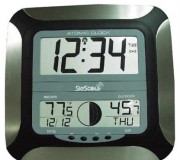
The idea of the atomic Clock was first proposed in the year 1945 by a physics professor of the Columbia University named Isidor Rabi. He suggested that a clock could be devised using a technique known as the atomic beam magnetic resonance which he had developed in the 1930s.The world’s first atomic clock which utilized the vibrations of ammonia molecules was subsequently introduced in the year 1949 by the National Bureau of Standards (NBS).

Later in the year 1955, the first cesium-beam atomic clock was built by the National Physics laboratory of England. The cesium-beam atomic clock uses the frequency of the microwave spectral line radiated by the cesium atoms as reference. This accounts for the high level of accuracy of the cesium-beam atomic clock. It is estimated they gain or lose less than one second in three million years.

Who Invented the Atomic Clock

Many standard laboratories around the globe maintain atomic clocks. These laboratories broadcast highly accurate time signals across the world by the means of shortwave-radio broadcast stations or by artificial satellites.

There is a variety of different types of atomic clocks available today. The principle behind all the various types of atomic clock remains the same; the only difference is related to the element used. The Rubidium atomic clock is the most compact and simplest of all atomic clocks. Cesium atomic clock is extremely accurate and commercially successful too .

Related Articles:

Who Invented the Atomic Bomb

The Atomic Bomb was first produced under the ‘Manhattan Project’ during the Second World War. The efforts of Nazi Germany towards purifying Uranium 235 to build an atomic bomb threatened the United States compelling them to undertake the Manhattan Project for building the nuclear weapon.

A brilliant named physicist Robert Oppenheimer was the one who headed the Manhattan Project for its entire span of six years and oversaw each stage from conception to conclusion. He was among one of the chief scientists responsible for unleashing the atomic power.

Who Invented the Atomic Bomb

The atomic bomb initiates a nuclear chain reaction releasing a tremendous amount of energy. The biggest challenge of building the atomic bomb during the Second World War was to obtain enriched Uranium suitable to withstand a nuclear reaction. A huge laboratory was set up in Oak Ridge Tennessee for this purpose.

The first demo of the atomic bomb was conducted at a site called Trinity in New Mexico. The demonstration was a success and established the fact that the nuclear chain reaction would detonate the weapon as expected. The second and the third explosions were carried out in Japan putting an end to the Second World War.

More than $2 billion were spent during the Manhattan project for the creation of the atomic bomb. Some of the greatest minds of our times created this heinous weapon which claimed millions of lives. The invention of the atomic bomb was instrumental in bringing humankind to the brink of destruction.

Related Articles:

« Previous Entries Next Entries »

Categories