Articles


Subscribe to RSS feed

Who Invented the Balloon

There are several stories towards invention of balloons. Both gas filled and hot-air balloons were invented in the year 1783.

Etienne Montgolfier and his brother Joseph from France noticed that bits of paper floated in the hot air escaping the chimney when the fire of their kitchen was alight. They tried an experiment based on the same process with paper bags in 1782. They made paper bags out of cloth lined with paper. In a public square they set up fire under the bags and the bags floated like balloons for a mile. A year later they arrived at Paris in the month of September with a big hot air balloon and sent few animals afloat in the balloon. It has said to be been watched by King and queen of France and the balloon carried the two brothers safely for about eight kilometres in 30 minutes.

Balloon Who Invented the Balloon

In the meanwhile, JAC Charles, a Physicist in Paris heard about this story of the balloon and two brothers in Lyons. But he was not aware of any details and in August he used Hydrogen to fill up a small balloon. When in 1783 he witnessed the Montgolfier brothers fly their balloon, he was excited that his balloon was a totally different type. In December the same year, he flew his balloon, just like a modern gas balloon and travelled safely with two people for about 27 miles.

Michael Faraday invented rubber balloons in 1824 after experimenting with various gases.

Related Articles:

Who Invented the Compass

History of the compass can be traced from the 2nd Century BC and has its origin from China. A study revealed that Omlecs were using compass during 1000BC, but there is no authenticated proof towards the same. It is a difficult task to identify the first inventor of compass. The earliest models of compass were referred to as lodestone.

Compass was mentioned as a tool or device for navigation in the year 1117 by Chinese and the same has been moved to Europe. Chinese traders when travelled to Middle East left their impact of the compass on European countries. But many assumed that the compass was the invention of Europeans. It is a navigational instrument that is designed to determine the direction of magnetic poles of the Earth. It consists of a magnetized pointer that is generally marked in the north end. It was used for safe and secure ocean travel. Compass was patented by Sir Edmund Halley during 1690.

Who Invented the Compass

The modern electromagnetic compass was invented by William Sturgeon in the year 1825. Since his invention, different types of compasses were introduced and his invention leads towards development of modern compass. The invention of compass is yet another triumph. It is ranked as one of the most important device that has been developed by human mind.

Related Articles:

Who Invented the Bicycle

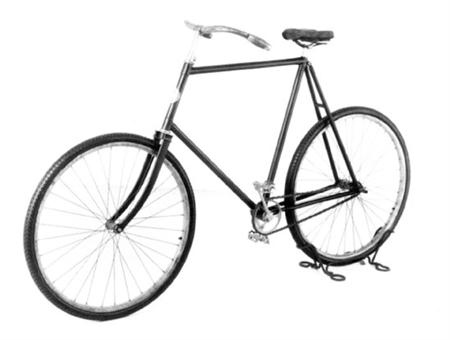
Bicycles were introduced in 17th century. It was the first medium of transport made using two wheels. The term Bicycle was coined in 1860 in France. The invention of bicycle has brought an enormous impact on society with respect to culture and development of modern industrial methods. It acted as a key factor to several developments in automobile industry.

The first bicycle is said to be invented by Pierre Michaux along with Pierre Lallement. In 1860, these Frenchmen added to the front wheel, a crank drive which had pedals. This sent the velocipede in a new direction, giving way to the modern bicycle. Though this had been tried many years ago with a prototype built by Douglas Grasso, it was Michaux and Lallement who gave the world a successful working model of the bicycle. Baron Van Drais from Germany had invented another bicycle in the year 1817. However, his invention was made of wood and steerable wheel with no pedals.

Who Invented the Bicycle

Bicycle as an important mode of transport for people picked up popularity in 19th century. This has been the principle mode of transportation in many countries for centuries now. It is a pedal driven and single track vehicle with two wheels, and the bicyclist or a cyclist is required to use human effort in order to propel the bicycle. However, with the gears being introduced in to cycles, the speed can now be easily increased with minimal effort.

Related Articles:

Who Invented Bridges

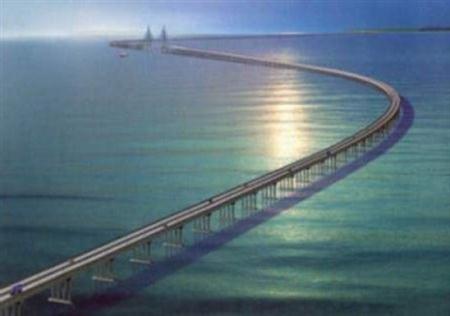
Bridges have reduced gaps and have eased many distances. The first inventor of bridge was probably Mother Nature itself. Initially in primitive era, fallen trees, stones across rivers and other water bodies have helped humans to cover many distances. The strength and endurance of a bridge depends totally on its support at both ends. Later man improved the ways to use fallen logs and branches to form the first man made bridges. The first man made bridges belonged to the Greek civilization. The first mentionable bridge still in use is the Arkadiko Bridge of Peloponnese of Greece which was used for chariots.

Another civilization that boasts of excellent early architecture in bridges is the Romanian Civilization. Romans were the first to use manmade materials like cement in making arch bridges that are known in history to be extremely strong. India too has been credited with creation of early bridges. Many archeological remains of the Mauryan dynasty show that some form of bridges existed under the ruler Chandragupta. The first hanging and suspension bridges were from South America in late 15t century. Another old stone bridge was Zhaozhou Bridge in China which was made somewhere around 605 AD. Wooden bridges came much later in the history of bridges.

Who Invented Bridges

Related Articles:

Who Invented Baby Carriage

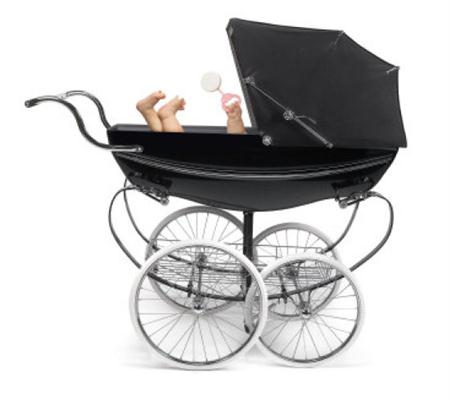
The baby carriage was invented by an English architect named William Kent in the year of 1733. William Kent was appointed by the third Duke of Devonshire to design a carriage for his children. He designed the carriage with a harness that could be easily pulled by an animal such as a dog or a goat. It was a shell shaped buggy with attached springs especially designed for a comfortable ride for the children.

The Baby carriage rapidly gained popularity among the wealthiest circles of Europe. After Queen Victoria bought three baby carriages in the year 1840, it became a status symbol of the rich and elite. However, the traditional buggy was not as safe and functional as the modern day prams.

Who Invented Baby Carriage

Later in the year 1889, William H. Richardson patented an improved version of the baby carriage which incorporated features present in the modern strollers. He was first to design the reversible baby carriages. The design of the carriage featuring a joint in the centre allowed for the basinet of to be turned towards the person pushing it. The carriages manufactured up till now did not offer easy mobility while turning in a different direction as the wheels could not move independently of one another. Richardson improvised on this aspect by introducing axles on the wheels. As a result his carriage could spin a full 360 degree with much ease and also occupying a smaller turning area.

Related Articles:

Who invented the Airplane

Human flight has been the dream of so many since probably before civilization was invented. The airplane, a fixed wing vehicle capable of controlled flight like a bird, able to take off, maneuver through air currents in any direction, and then land at will safely again, that has been the challenge, and it was the first flight of a heavier than air airplane that finally decided the name of the inventor of the airplane.

Wright Brothers

Wright Brothers

As long ago as the 10th century in Islamic Spain, a scholar named Abbas ibn Firnas, born in Ronda, but who found favor in Córdoba, at that time the world’s most enlightened city, and quite possibly it’s largest too, invented a set of wooden wings covered with bird feathers, and then jumped from the tower of Córdoba’s great mosque, and successfully managed to glide to the base although his landing jarred his spine. Despite only gliding a short distance, history has been kind to ibn Firnas and he is recognized as the first human to successfully fly.

Of course gliding from a tower to the ground is a very different thing from taking off on flat ground with enough power to attain powered flight, and the next person to give serious thought to how this might be possible was Leonardo da Vinci who secretly designed a vehicle that today reminds us of a corkscrew with a seat suspended to it’s side. Modern scientists have computed the odds of da Vinci’s flying machine being able to fly as quite high, though sadly da Vinci’s machine was never built.

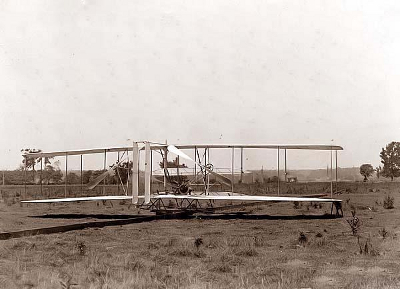
In the early 1900s Wilbur and Orville Wright, inspired by the efforts of Otto Lilienthal and Percy Pilcher, pioneers of 19th century gliding, the Wright Brothers set about designing an airplane that would give them complete control over flight rather than just rely on following the direction of the wind. In 1903, the Wright Brothers successfully tested their airplane and flew for 12 seconds, but by the end of that same day had increased this to 59 seconds and over 850 feet of flying, although their height above ground never increased beyond about 10 feet.

Wright Brothers Airplane

Wright Brothers Airplane

Controversy surrounds the Wright Brothers claim to have invented the airplane, with many flight historians claiming their achievements were remarkable, but were nothing more than gliding and shouldn’t be considered the first true flight. Instead, Alberto Santos-Dumont, a Brazilian living in France is considered by many as the inventor of airplanes for successfully flying a proper fixed wing plane in 1906.

Others dispute both the Wright Brothers or Santos-Dumont as the first to fly, and point to Clement Ader of France who was witnessed flying a plane he named Eole in 1890. His first flight only managed a height of 12 inches and a distance of 50 meters, but by 1892 this had been improved to over 200 meters distance at a height of 2 feet. Consensus seems to favor the Americans, Wilbur and Orville Wright as being the first to fly, but the argument will probably never be settled.

Related Articles:

Who invented the Car

Since the invention of the wheel people have been using carriages drawn by horses and donkeys for transport, but the invention of the car truly redefined transport since speed was no longer limited by the speed of the slowest running horse. Desire for a horseless carriage has been around for many hundreds of years, and some of the first experiments predate the industrial revolution.

Cars, which are also known as automobiles have gone thru many styles and variations, with early cars looking more like trackless trains or horse drawn carriages than anything we would recognize as a car in the 21st century. On the other hand, some of the futuristic designs presented at car shows in the 20th century, and even some of the current crop of future designs are so different from anything we have seen in production that people of the 22nd century may be as fascinated with today’s cars as we are with those first models.

Ferdinand Verbiest

Ferdinand Verbiest

Many people believe the very first car ever invented was a small scale steam model built for the Emperor of China by Ferdinand Verbiest in 1672, but modern historians dismiss this claim since the vehicle was just a toy and could never have been used to transport a person being only 64cm long. Steam engines have been known of since Roman times and whilst Verbiest’s design was unique, even if it was built today it could not transport people or cargo since the entire platform was taken up with the engine.

The first full size vehicle capable of carrying people some distance was invented by a Frenchman named Nicholas-Joseph Cugnot whose four wheeled carriage had a large steam boiler attached to the front. His design worked, but the technology in 1770 didn’t exist to create high pressure steam so his car was slow and quickly abandoned. Steam was experimented with for many years, and by the 1830s was being used extensively in the construction of trains and buses in London, but as the power behind cars it never really was accepted.

The first car with an internal combustion engine using liquid fuel was built by Siegfried Marcus in 1870, but his design was only a proof of concept and it was another 18 years until he produced a vehicle with seating for passengers, and rightfully cementing Marcus as the inventor of the car. He only built one model, which can still be seen in the Technical Museum of Vienna.

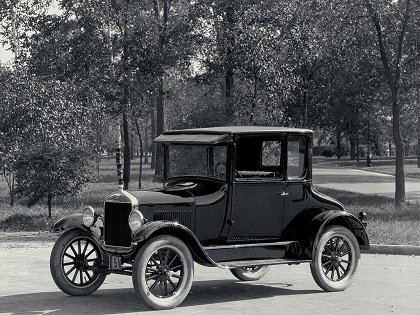
Ford T

Ford T

Many historians consider a German, Karl Benz, to be the true inventor of the car because his was the first car with an internal combustion engine built with seating for passengers in 1885, and entering production in 1888, leading many to suggest Marcus only developed his second vehicle after seeing the success of his counterparts in Germany.

Related Articles:

Who invented the Segway

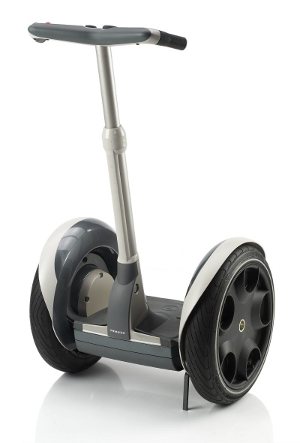
The Segway electric vehicle made by Segway Inc of the United States is a unique battery powered vehicle that needs only two wheels and self balances while riders stand with their feet placed on two small platforms located on the inside edge of each wheel. A steering column is positioned in the center of the vehicle with controls for acceleration and braking.

Dean Kamen

Dean Kamen

In 2001 the Segway PT, short for personal transporter, was officially unveiled by Dean Kamen, the inventor of the Segway on the ABC TV show “Good Morning America” with Diane Sawyer who uttered the infamous line “That’s it?” in a very underwhelmed tone of voice after the wraps were taken off.

The previous year Kamen’s new invention had been widely speculated about as the new thing in transportation that Steve Jobs famously said would force cities to be redesigned. The story leaked about the imminent release of the Segway after Kamen had invited a journalist Steve Kemper to his DEKA factory to see the Segway prototype. Diane Sawyer’s reaction was sadly echoed by many and sales of the Segway were a disappointing 6,000 units in it’s first 3 years.

Dean Kamen had previously made his fortune with a number of other inventions such as the AutoSyringe allowing patients to receive medications reliably without having to be under constant care, and the iBot, a gyroscope balanced wheelchair that could climb stairs.

Kamen’s inventions have allowed him to develop an invention design company, DEKA, that employs over two hundred staff, and is the company that overseas all of his inventions. Shortly after the first Segway was launched, a spinoff company was founded with it’s own purpose designed factory to manufacture and sell the Segway PT. In 2002 the Segway finally reached the market.

Late 2002, after the disappointing release of the Segway PT it emerged that in fact Dean Kamen may not have been the actual inventor of the vehicle after a Japanese professor, Kazuo Yamafuji from Tokyo University announced that he had invented and produced prototypes of a similar vehicle in 1986, and that he and his colleagues had also registered a patent for their vehicle.segway Who invented the Segway

In fact Dean Kamen never claimed to be the inventor, his own patent application acknowledged the previous Japanese patent, thought Kamen’s representative stated that the Segway PT was so different being produced 15 year later that there was no need to change their belief that the Segway PT was invented by DEKA and Dean Kamen.

Related Articles:

Who invented the Space Shuttle

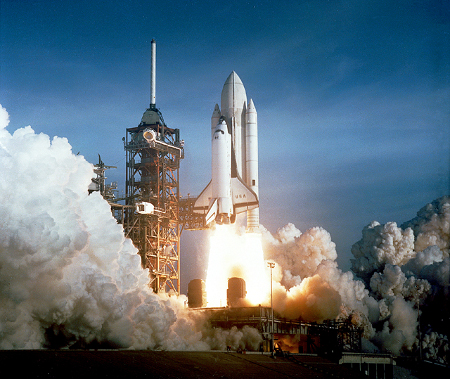
The Space Shuttle is a spaceplane developed and operated by the US space agency NASA which is hurled into space attached to two powerful rockets and a main fuel tank, tho the rockets and the fuel tank are jettisoned before the shuttle enters orbit. Once in orbit the shuttle is capable to traveling to the International Space Station or simply release and in some cases capture satellites and then glide back to earth to land just like a regular airplane.

Nasa Logo

The space shuttle project is a huge undertaking and cost hundreds of billions of dollars over it’s full design and operational life, and may still cost the US billions of dollars before the fleet is retired. The space shuttle was designed and built by North American Aviation, a division of Rockwell International having been awarded the first contract in 1972.

North American had a history of experimenting with space planes being the primary contractor on the X-15 experimental rocket powered aircraft that flew between 1959 and 1968 setting several speed and height records in its time. The X-15 test flights provided valuable information for the Bell X-20 Dyna Soar, a 1960s winged test vehicle that looked quite similar to a small space shuttle but never flew.

The X-20 designer was a German rocket scientist, Walter Dornberger, who worked for Bell between 1950 and 1965 though he based his design on the research carried out by another Peenemünde rocket scientist Eugen Sänger who had been working on an atmosphere hopping bomber that was to be named Silbervogel (silver bird) for the German Air Force.

Space Shuttle Launch

Space shuttle development was signed off by President Nixon in 1972, many years after those pioneering rocket engineers had retired or passed away, and the project was so complex that thousands of engineers were needed to invent or design the millions of components that together make up a functioning space shuttle. No one person could ever claim to have invented the space shuttle, and even the work done by post war rocket scientists wasn’t directly used in the shuttle design since their original technology was so outdated.

The research carried out since had pushed NASA’s knowledge of space flight to levels never imagined in the 1950s. Within the US space industry, spokespeople who aren’t directly involved in designing vehicles will often be assumed to be part of the design team, but in many cases they are simply appointed for their speaking and writing skills while the true inventors and designers remain behind the scenes working in their laboratories, where most of them prefer to stay.

Related Articles:

Categories