
2
2009
Who Discovered DNA
 An article by
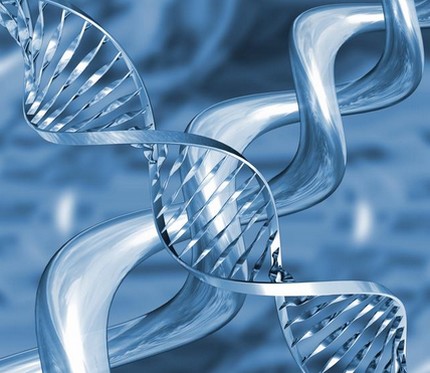
You can look at the DNA as a set of codes. These codes contain information that we have inherited from our mother and father. The DNA contains protein codes that decide how tall or dark you will be, or how long you will live. Well, almost.
Who discovered the DNA
DNA is short for deoxyribonucleic acid. The discovery of DNA came about as the high point of James Watson’s and Francis Crick’s research. Another important name that comes up is Rosalind Franklin.
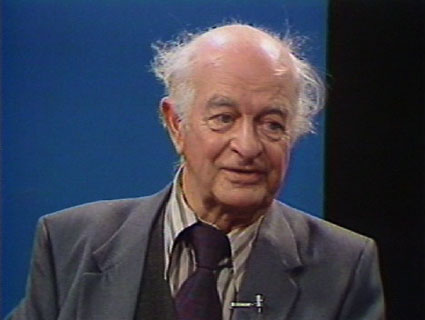
Studies on the DNA were done as early as the 1950s by Nobel laureate Linus Pauling. While stationed at the California Institute of Technology, Pauling proposed a prototype DNA model. In England around the same time, James Watson and Francis Crick were studying the structure of hemoglobin, and not the DNA. Meanwhile, at King’s College in London, Maurice Williams was studying the DNA molecule, but he needed an x-ray expert. The role was easily filled in by Rosalind Franklin. She shared her expertise on a mathematical model of the DNA. Two years later a full model of the DNA was presented publicly by Watson and Crick. Rosalind Franklin seemed to have disappeared in the background after that.
DNA and our gene pool
DNA is passed on 50/50 from our parents. The DNA we get from our parents comes in two forms: Genotype (the genetic information), and phenotype (the visible physical traits). When you consider these two, you can somehow tell what offspring you will likely have. Going by either one could be confusing (there is such a thing as recessive genes-traits that remain dormant over a certain time). Remember, too, that genes do not literally combine. Genes are passed on unbroken from generation to generation, depending on which side is the strongest. That is why some traits show up in one generation and disappear in the next. Strangely enough, traits that are not needed by the person for survival are “repressed”. But they do not completely disappear.
Uses of the DNA
Aside from being the imprint of our parents, thus giving us and doctors an idea of our possible diseases, the DNA can be used in many ways. Scientists use the DNA to study plant, animal, and human genetics in order to improve their conditions. Cloning easily comes to mind, but there are positive aspects to it, for example, stem cell therapy in curing cancer. In any major organ transplant, the DNA of the donor and the receiver should match. There is where DNA science plays a vital role.
Your DNA sequence being uniquely yours alone, this has helped solve countless criminal cases. DNA identification is a science in itself in that police investigators cannot take it for granted in going after fugitives.
J Craig Venter’s Human Genome Project
J Craig Venter has been able to decode the sequence of the DNA. He is the brains behind the Human Genome Project. J Craig Venter initially worked with the US government in identifying the 20, 000 – 25, 000 genes making up the DNA. In less than 3 years he was able to identify the 24, 000 genes in humans. His study showed that our genes have twice the range of roundworms and the same as that of mice.
To settle all issues of race once and for all, J Craig Venter has proved that all humans have the same genetic make up (99.99%). Racial variations such as skin color, build, etc, are genetically pointless. This means we all came from the same ancestral mother.
Related Guides


