English flagItalian flagKorean flagChinese (Simplified) flagChinese (Traditional) flagPortuguese flagGerman flagFrench flag
Spanish flagJapanese flagArabic flagRussian flagGreek flagDutch flagBulgarian flagCzech flag
Croat flagDanish flagFinnish flagPolish flagRumanian flagSwedish flagNorwegian flagHebrew flag
Serbian flagSlovak flagTurkish flagHungarian flag    
By N2H


Articles


Subscribe to RSS feed

Who invented Legos

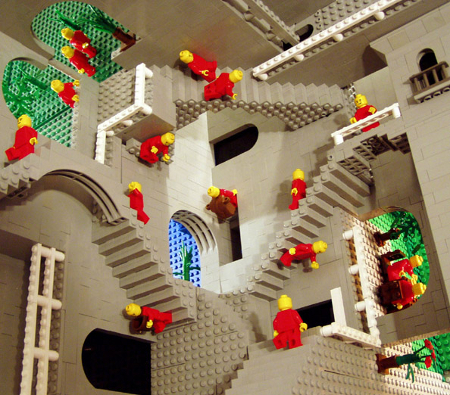
Children’s building block bricks, a worldwide phenomenon for over 50 years are most well known from the Lego company whose product is regularly used to create spectacular miniature models of well known landmarks such as the Chrysler building in New York, and miniature towns complete with parks, railways, and people going about their business.

Ole Kirk Christiansen

Ole Kirk Christiansen

The Lego company are best known for the Automatic Binding Bricks that are made of plastic and have several small studs on top arranged in a grid pattern, and a number of tubes on the underside allowing bricks to connect together firmly without coming apart unless pulled apart. The range of bricks has been substantially expanded to incorporate electronic devices and small motors, as well as wheels, roofs, windows, doors and many other compatible pieces that extend the use of the bricks.

The Lego company was founded in 1932, but didn’t start making plastic toys until 1940. After the end of the war in Europe the founder of the company, Ole Kirk Christiansen started manufacturing the Lego bricks which the company is now known for, and in popular culture becoming identified as the inventor of legos bricks, although history has since corrected this erroneous fact.

In fact, Christiansen was not the inventor of the bricks, back in 1948 he had approached a machinery company in England who he wanted to buy a plastic extruding machine from. The English company sent as samples some of the plastic goods being produced by their customers including a set of inter locking bricks from a UK company Kiddicraft.

Lego Construction

Christiansen liked these bricks so modified them slightly and started production of the Lego bricks without first checking to see if Kiddicraft had a patent on the bricks. Kiddicraft was run by its founder, Hilary Fisher, who had invented the self locking bricks and filed patents in 1947, 1949, and 1952 for them. Lego didn’t start producing the bricks until 1949, but didn’t patent their design until 1958.

The true inventor of the Lego bricks then must be recognized as Hilary Fisher from England, who his daughter said after his suicide in 1957, never knew of Lego’s patent infringement. Kiddicraft had been quite aggressive in defending their patent and would have surely sued Lego if they had known. It wasn’t until late 1959 that British Lego Ltd was established to market Lego bricks in the British Isles.

Lego acknowledged that the role played by Fisher and his company Kiidicraft when they bought the rights to Kiddicraft’s bricks for 45,000 pounds in 1981 at the height of a patent infringement case they had brought against Tyco Toys.

Related Articles:

Who invented the MP3 Player

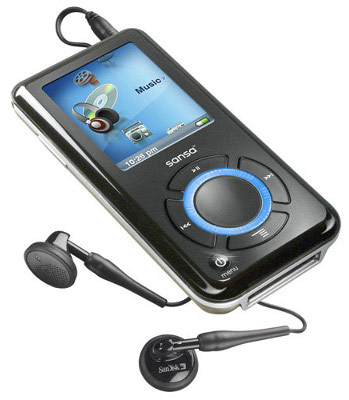
MP3 players are different in some ways to portable music players, and shouldn’t be confused. Before the mp3 technology existed it was still possible to have digital audio files stored on portable players, but the invention of the mp3 standard paved the way for a great volume of music to be stored on a single small device, typically each mp3 is about 8 times smaller than the original uncompressed file.

Karl-Heinz Brandenburg

Karl-Heinz Brandenburg

Music compression had been a holy grail of digital audio for many years, and in 1987 the Fraunhofer Institut from Germany started researching a compressed form of audio that could be used for digital TV broadcast, and in 1991 the company finally succeeded in inventing audio music in compressed form. MP3 is an acronym of MPEG Audio Layer III, and the MPEG part means Motion Pictures Expert Group.

The patent for the mp3 compression format names Karl-Heinz Brandenburg, Ernst Eberlein, Bernhard Grill, Bernd Kurten, and Thomas Sporer as the inventors of mp3, though Brandenburg had been researching a method of compressing digital audio since 1977 so is usually considered the most influential of the group who invented mp3.

For several years the mp3 format was used only in research institutes and amongst musicians who needed a compressed format for storing music compositions.By the middle of the 1990s home users were encoding music and swapping albums over the Internet, and by 1998 the Winamp player for Windows had been invented.

In the summer of 1998 a solid state mp3 player with a 32mb storage chip made by Saehan of South Korea, and marketed as the Eiger Labs MPMan, was the very first mp3 player to be sold. It wasn’t well received because it was limited to 32mb and could only be upgraded by sending the device back to Saehan.

MP3 Player

A few months later Diamond Multimedia started shipping a much smarter looking mp3 player they called the Rio PMP300 which also shipped with 32mb but could be expanded using SmartMedia cards allowing users to buy several cards and fill them with music. The Rio PMP300 was only available for a few weeks before the RIAA forced Diamond to suspend sales pending a decision by the Central District Court of California.

On October 26th 1998 Judge Andrea Collins denied the claim by the RIAA that the Rio PMP300 breached the Audio Home Recording Act, allowing Diamond to resume sales, and by the middle of 1999 over 200,000 units had been sold.

Check also who invented the iPod.

Related Articles:

Who invented Bubblegum

For thousands of years people around the world have been chewing gum, the ancient Greeks flavored gum they got from the mastic tree, while Mayan people chewed gum they got from the sapodilla tree, but of course chewing gum in the US comes directly from the habit of native American Indians who used to chew the sap of spruce trees, which by the mid 1800s had been commercialized and was growing in popularity.

Competing inventors for the claim of first to produce bubblegum Frank Fleer of the Fleer Chewing Gum Company, and Peter Meijer of the Meijer Company are both believed to have created their bubblegum inventions in 1906. Unfortunately both recipes were unsuitable, being too sticky and never went to market though Fleer named his recipe Blibber-Blubber. Their publicity however started a craze with people all of the US wanting bubblegum and leading to many fraudsters popping up who claimed to have a gum that would blow bubbles.

Bubblegum

In 1924 a company based in Shelby, Ohio marketed the first bubblegum nationally which they called Blow Gum, a product which is no longer available but in its day was very popular amongst children who wanted to collect the trading cards packaged with Blow Gum. Legend has it that bubblegum from the Shelby Gum Company never really blew very big bubbles, it was mostly only capable of being popped outside the lips.

The first true bubblegum available is the gum made by the Fleer Chewing Gum Company who finally perfected their recipe in 1928 and marketed it as Dubble Bubble. According to Fleer company history, the recipe for bubblegum was invented by one of the company’s accountants, Walter Diemer who enjoyed experimenting with gum recipes in his spare time.

Controversy surrounds the claim that Walter Diemer is the inventor of bubblegum since no known patents under his name exist, whereas patents for enhancing chewing gum exist from 1928 and 1930 submitted by Gilbert Mustin, the president of Fleer at that time. Research amongst patent experts suggests these patents don’t actually describe bubblegum, but instead just a process for packaging chewing gum.

The first patent ever issued by the US Patent Office to relate specifically to bubblegum was to a Katie Wilcox in 1936 and described a recipe for bubblegum which she called ‘bubble chewing gum’ in her application, but there is no record if her gum was ever produced.

From the early 1930s the Fleer company would organize regular bubble blowing competitions which often ended in contestants having gum stuck all over their faces. In 1975 the LifeSavers company corrected this with their invention of soft bubblegum known as Bubble Yum that could be easily peeled off the face and hands if a bubble burst. Soon after, Hubba Bubba, and Bubbilicious entered the market and redefined how bubbles are blown with bubblegum.

Related Articles:

Who invented the Toilet

Toilets are perhaps one of the most useful inventions of all time, at least to anyone who has ever used one, yet despite their function are a fairly recent invention in the history of humankind. There are several versions of toilets, from bed pans, to deep holes dug in the ground, thru to the modern toilet with a flushing mechanism as we know today.

Sir John Harrington

Sir John Harrington

Who first invented a container to be used for human waste is lost in the mists of time, and probably dates back to the first pottery workshops and infirm members of society but archeologists consider these to have been normal pots that were used in difficult circumstances but never intended for the purpose. In ancient India and parts of the Middle East public toilets that used water to wash away the waste have been known for 4,600 years and were flushable toilets with sophisticated sewage systems.

The first modern toilet with a flushing mechanism and a cistern that would automatically stop the running water after the waste had exited the bowl wasn’t invented until 1596 by Sir John Harrington in England. He was a godson of England’s Queen Elizabeth and invented a water closet that was universally ridiculed by his peers for being a rather useless invention. By all accounts Sir John and Queen Elizabeth were the only owners of a Water Closet (WC) in their day.

The idea of a flushable toilet never completely disappeared, and in 1777 another Englishman named Samuel Prosser registered a patent for a toilet sysem that used a plunger to empty a cistern and thus evacuate the bowl. In the same year an improvement to the design was patented by Joseph Bramah. Between 1777 and 1852 a number of designs were invented and patents registered.

Toilet

1819 was a defining moment in the history of the flushing toilet, this was the year that the silent siphon discharge system was invented by Albert Giblin, but in 1852 the s-trap was finally invented preventing waste odors escaping back into the bowl by the simple use of clean water filling the low point of the bend in the s-trap, a design that is basically the same as modern toilets with few modifications.

An Englishman by the name of Thomas Crapper who was a plumber in London bought the rights to manufacture Giblin’s toilet design and stamped the words ‘T Crapper & Co’ on the bowl of his toilets which were then used by British servicemen during the first world war. The informal name for a toilet, the crapper, is derived from soldiers using Thomas Crapper’s surname instead of the longer more correct name water closet.

Related Articles:

Who invented the Internet

Who invented the Internet should be a really simple question to answer, after all the Internet has only been around for a few years, yet already controversy and the shrouding mists of time are starting to obscure the true record. Most importantly, the Internet and the World Wide Web are not the same thing, and this leads to a lot of confusion amongst people who see web browsing as the whole point of the Internet.

Vint Cerf and Bob Kahn

Vint Cerf and Bob Kahn

In 1989 two scientists working for CERN in Switzerland started working on a concept for sharing research information, they were Tim Berners-Lee and Robert Cailliau. Sharing information prior to the invention of the world wide web meant simply uploading text documents to a file server which other people could access if they knew the precise location of the document.

Berners-Lee and Cailliau wrote a proposal for a hypertext language that would let authors of documents add markup letting readers see the document as it was meant to be read, with the inclusion of images, text highlighting, and most important of all, direct linking to related pages. This was published in 1989, and in 1990 Berners-Lee wrote the first web browser that could interpret HTML markup, and used his new HTTP protocol to access pages.

The Internet as a network of computers, which is its main function has been in existence much longer than the invention of the world wide web, and was first written about back in 1961 when Leonard Kleinrock wrote a paper which described a process for packet switching. By 1969, the same year as the first moon landing, Kleinrock and a team of engineers created the first ARPANET, a wide area network that is the precursor to today’s Internet.

World Wide Web

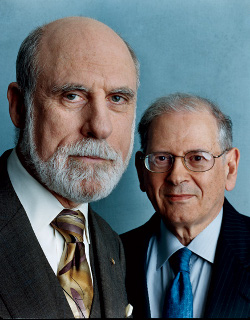
Probably the true inventors of the modern Internet are two Americans named Vint Cerf and Bob Kahn who invented the TCP protocol which controls the way information is sent from computer to computer. Applications such as email, web browsing, or file transfer are handled by the TCP protocol and the Internet could not exist without this technology. For this reason many people consider Cerf and Kahn the true inventors of the Internet, tho they have publicly stated the Internet was invented by many deserving people and dedicate their awards to their colleagues who helped them.

In 1999, while appearing on CNN interviewed by Wolf Blitzer, Al Gore, the democratic nominee for President of the United States claimed to have been influential in creating the Internet, a statement many opponents of Gore immediately seized upon as a lie. In fact Gore sponsored the High Performance Computing and Communication Act of 1991 while he was a congressman in the US senate. This act finally removed restrictions to commercial use of the Internet, so in some ways Gore can be included amongst those who directly contributed to the invention of the Internet.

Learn about the complete history of the internet.

Related Articles:

Who invented Baseball

Baseball’s history is fascinating, and a lot of politics is involved, which seems sad for a game that is America’s national pastime and has been for nearly 200 years. Nobody knows who actually invented baseball but a couple of names, Abner Doubleday, and Alexander Cartwright have been linked with the sport.

Alexander Cartwright

Alexander Cartwright

In 1905 Albert Spalding, formerly a star pitcher and the man who created the Spalding sporting goods company organized a commission of former baseball executives and US senators to investigate who invented baseball. The Mills Commission took three years to deliberate and in 1908 published a report claiming Abner Doubleday as the inventor of baseball in Cooperstown in 1839.

Doubleday was a West Point graduate who went to become a decorated war hero of the United States who served in the Mexican-American War, the American Civil War, and various Indian Wars. The Mills Commission decided after hearing the testimony of a single witness, Abner Graves, that Doubleday invented baseball, wrote the rules of play, and designed the diamond field on which the game is played.

Sadly this history of baseball has been completely overturned as a hoax perpetuated by Albert Spalding who founded the Baseball Hall of Fame in Cooperstown, New York, and who it is now believed was desperate to create an inventor of baseball who may have lived in Cooperstown, and to ensure that baseball was forever considered an All American game invented in the US.

In fact, Abner Graves shot and killed his wife only a year after testifying and spent the remainder of hi life in a mental institution so has been discredited as a reliable witness. As well, Abner Doubleday isn’t believed to have ever been in Cooperstown, and never mentioned any claim to inventing baseball and isn’t known to have ever played the game.

Baseball Club and Ball

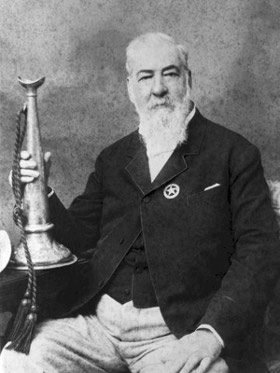
Instead, the truth of the invention of baseball is a much simpler story about Alexander Cartwright and the New York Knickerbockers who used to play rounders in the 1840s, but needed a set of rules that could be used for interclub games. Cartwright and a committee from the club published their rules in 1845 and the very first game played under the new rules took place in 1846 on the 19th June between Cartwright’s Knickbockers and a rival team, the New York Nines.

Alexander Cartwright was a lifelong promoter of the game, who in the 1850s travelled from New York to California introducing baseball to every town he stayed in, and then when he retired from business moved to Hawaii and setup a baseball league in Honolulu which is the direct ancestor of today’s Major League Baseball.

Learn more about the history of baseball.

Related Articles:

Who invented Fireworks

Fireworks have been in existence for thousands of years, and most experts agree the the Chinese must have invented fireworks over 2000 years ago, perhaps even as much as 2500 years ago. The first fireworks know to these ancient people were discovered by accident when green bamboo stalks exploded in their evening camp fires.

The sound of the explosion frightened them very much and were first attributed to the gods being angry with them but it was quickly discovered that green bamboo always exploded, and priests of the time quickly surmised that if the people were very afraid of the noise then so too must the evil spirits who were known to come out of the hiding places at night.

Chinese Fireworks

Chinese alchemists stumbled on a chemicals that could be made to burn very quickly and release a tremendous amount of light and smoke, and would sometimes explode with great force, and this led to the invention of fireworks as we know them today, and also to the invention of gunpowder which medieval Chinese artillery would use to cause damage to the enemy’s forces and defensive walls.

The invention of fireworks similar to those we know today didn’t really start to happen until after Marco Polo returned to Europe from the court of the Kublai Khan, though in Europe the main interest came from military scientists who wanted to develop cannons. Chinese fireworks with fins that would shoot straight up into the air were seen as frivolous and not useful, though they were in fact the predecessor of today’s rockets that propel the space shuttle into orbit.

Italians in the renaissance era were the first to properly develop fireworks that would show different colors when fired up into the air. The original Chinese invention only used white and blue, these being the colors of the compounds, but the Italians were able to invent gold and silver fireworks.

Fireworks

The first written account of fireworks for purely recreational use, and which is still in demand today by fireworks makers was authored by Frenchman Amedee-Francois Frezier in 1706, though earlier Chinese poets and historians had written about the use of fireworks in Chinese festivals and social events.

Even recent inventions of fireworks displays for the general public, and the various types of fireworks seen such as Peonies, Willows, Palms, Rings, Spiders, Roman Candles, and Cakes cannot be claimed to have been invented by any particular person since most fireworks manufacturers compete with one another for the biggest and brightest explosions, and all borrow ideas from each other.

Learn about the history of fireworks.

Related Articles:

Who invented Gunpowder

The invention of gunpowder has had one of the most profound influences on the history of warfare for the last thousand years, even though gunpowder was known to alchemists for another thousand years or more before the first use as an explosive in a military situation.

Gunpowder is used in military applications such as cannons and rifles, as well as in fireworks, and is primarily made by mixing sulfur, charcoal, and potassium nitrate into a compound that burns quickly. It as also known as saltpeter, and usually gunpowder can be used to describe other substances with similar burning properties.

Gunpowder

Gunpowder

The very first mention of gunpowder in writing dates back to around 140 AD in China when an alchemist of the Han dynasty court named Wei Boyang described the mixture and how it would create a lot of commotion when a flame was applied. Nobody is sure if Wei Boyan invented gunpowder, though it is possible since gunpowder doesn’t seem to have been known before this time.

Gunpowder as an explosive was known to the Chin dynasty only a hundred years later, though it was described by Ge Hong as dangerous since it couldn’t be controlled despite many alchemists trying, and unfortunately dying from the unpredictable results of poor mixtures. Several hundred years later T’ang dynasty scientists had invented gunpowder powered rifles using hollowed out bamboo tubes.

One end of the tube was packed with gunpowder and a small ball placed in the tube. When lit the gunpowder would explode and propel the ball into the enemy. Rifles and cannons made of iron took some time to invent, not being common until the Song dynasty of the 12th century, though reinforcing the original bamboo tube rifles with metal clasps which made it easier to hold and aim had been done since the end of the T’ang dynasty in the early 10th century.

Gunpowder spread from China to the Islamic world and the Byzantine Empire in around the time the Song dynasty was developing rifles and cannons, and their devastating use of gunpowder to destroy enemy armies and towns very quickly got the attention of foreign powers who rushed to copy and improve Chinese designs.

European gunpowder makers of the 15th century invented the corn cakes, a mixture of gunpowder and water that was shaped into a cake and allowed to dry, and then could be used inside cannons to produce a more consistent propellant that would burn completely before exploding, and paving the way for smaller yet more powerful cannons.

Related Articles:

Who invented the Computer

The invention of the computer is a fascinating story all about arguably the most important scientific invention of humanity’s entire history, perhaps even more important than the invention of fire, the wheel, or weaving. Computers have become indispensable in modern life, so much so our entire civilization would collapse to pre-industrial revolution levels if computers suddenly stopped working.

The origins of computers date back to the 1840s and the invention of the first adding machines such as those invented by Charles Babbage, an Englishman who created a machine that could accurately calculate a large volume of arithmetic using punched cards fed into the machine. Babbage has been recognized as the inventor of the mechanical computer, and some say the father of computing.

Mauchly and Eckert

Mauchly and Eckert

An intriguing earlier analog computer used for tracking the progress of the sun. moon, major planets, and the constellations was discovered by Valerios Stais in 1902 in the wreck of a Roman ship near Antikythera in the Greek Islands. Some historians and archeologists believe this may have been invented by the Greek astronomer Hipparchus, which if true would redefine who invented the computer.

In the late 1930s and early 1940s a electronic computers finally started to be developed, John Atanasoff and Clifford Berry inventing the very first electronic computer in 1937, though their machine wasn’t fully tested until 1942. The honor of inventing the world’s first fully functioning electronic computer goes to Konrad Zuse of Germany who successfully operated his Z3 computer in 1941, a year before Atanasoff and Berry.

In England an even more advanced machine, known as Colossus was built for the code breaking division at Bletchley Park in England during 1943 and 1944, and was invented by Tommy Flowers, a British Post Office engineer. In all eleven Colossus computers were built and provided the much needed information that allowed President Eisenhower to fix a date for the Normandy Landings.

After the war two Americans, John Mauchly and J. Presper Eckert designed and built another electronic computer known as ENIAC which had 7 times as many vacuum tubes as the Colossus machines and was designed to calculate US Army artillery firing ranges. The machine finally started operation in June 1946, long after the war had ended.

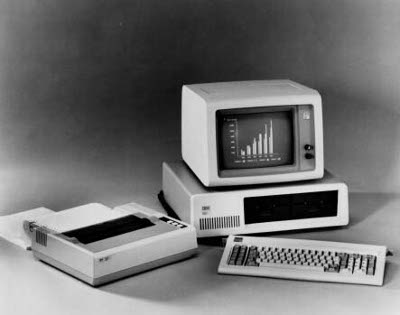
IBM PC

IBM PC

In 1971 Mauchly and Eckert, along with Rand-Sperry, unsuccessfully sued John Atanasoff for the right to have their computer patent on 1964, but based on a 1947 filing, to be considered the pre-eminent computer patent. Their goal was to claim royalties from other computer manufacturers, but Judge Earl R Larson of the US District Court in Minneapolis held in favor of Atanasoff even though he had never been able to successfully file a patent.

Whilst Atanasoff has been officially recorded as being the father of modern electronic computing, he has nevertheless not received widespread recognition as the inventor of the computer since supporters of Mauchly and Eckert, Zuse, and Tommy Flowers refuse to give up their long held belief of who invented the computer.

Related Articles:

Who invented Velcro

Perhaps the most useful invention of the 20th century, Velcro has become a ubiquitous product used extensively in clothing and the space industry because it attaches items together easily and without messy glues or causing damage. Velcro is a registered trademark of the Velcro Corporation founded by George de Mestral,the inventor of velcro.

Back in 1941, de Mestral was walking around the hills of Commugny in Switzerland with his dog, and when he got home noticed burrs from burdock on his clothes and the fur of his dog. George de Mestral was an engineer by trade and became curious about why the burdock was sticking. Looking at the burrs under a microscope he saw many small hooks that were catching on the loops of the weave of his clothes.

George de Mestral

George de Mestral

Inspired, de Mestral imagined a world filled with artificial burdocks that could be used in clothing instead of zippers. Over a ten year period he tried many different ways of producing a hook and loop fastener and was almost about to give up when he discovered that making the nylon hooks became easy when a hot infrared light source was passed over the nylon ends causing them to curl.

Another year passed before George de Mestral finally worked out how to create the loops, which were also made with nylon, but needed to be looped and heat treated to avoid reverting to plain nylon thread again. Unfortunately this invention wasn’t sufficient since the hooks would grab, but not easily let go.

The problem was solved by cutting the top off the loops with a pair of shears and creating a half loop which was springy and would grab the hook, then release with a snapping sound when pulled apart. Thus the invention of the hook and loop fastener was complete.

Velcro

The name velcro is a made up word that took the vel from the French word velour and the cro from the word crochet. Velcro has entered common use as a generalized word for hook and loop fasteners, and in the English language has even become a verb ‘to velcro’. In the 1950’s when Velcro was first introduced to the market it was advertised as the zipperless zipper.

Since those days George de Mestral’s velcro invention has been used extensively in the space industry, NASA famously used Velcro in the first moon missions to help secure items inside the capsule and as part of the suits astronauts wore. Velcro is also used in the automotive industry to secure carpets, headlining, headrest covers and toolkits.

Related Articles:

« Previous Entries

Categories