
2
2009
Who Invented the CD Player
 An article by
The Compact Disc (CD) player has revolutionized music recording and completely changed the way people enjoy audio playback in less than thirty years of production. CD players use a system of lasers that read digitally encoded bits of information that are assembled in the main processor into their original audio tracks.
The very first commercially available CD player was released in Japan in 1982 by Sony and was an immediate hit with the press and the buying public despite the high price of $900. The year before Sony had announced that in partnership with Philips, they had developed the compact disc player, but each company had been independently developing their own technologies since the mid 1970s. The Sony CDP101 was the very first CD player sold, and feature a horizontal drive tray, whereas the prototype machine shown the year before had used a vertically mounted tray.
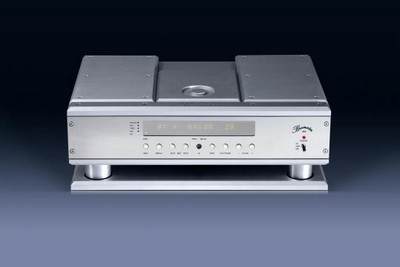
A joint patent for the CD player and its technology was registered by Sony and Philips in 1980 when they published their Red Book which details the standards for creating CD players, recorders, and the way discs should be encoded. Kees Immink (Philips) and Toshi Doi (Sony) are listed as the inventors of the compact disc standard, so the simple answer to the question who invented the CD player has been answered, or so we think.
The story doesn’t stop here, optical discs from which the CD is derived were actually invented a long time before Sony and Philips ever joined forces to create the Red Book. It is often forgotten that in fact using lasers for reading data had been experimented with since the 1960s, with the Laserdisc being invented in 1969 and a prototype machine made in 1972 by a joint venture formed by Philips and MCA of the US. Holographs had been encoded into optical discs in those early tests, and it didn’t take long for scientists to start thinking about fully digital encoding.

The laserdisc technology had been invented even earlier than the first LaserDisc by an American scientist, David Gregg in 1958, who named his technology VideoDisk, and registered patents in 1961 and 1969. Gregg’s VideoDisk invention wasn’t really anything like the modern CD, but he was the first person to recognize that optical media could be used. Gregg later sold his company and patents to MCA but the very first commercially produced VideoDisk didn’t arrive on the market until the late 1970s.
To make matters even more confusing, the Optical Recording Corporation (ORC) of Toronto, a company founded by some of Gregg’s former associates, bought the rights to other optical recording patents from another American scientist, James Russell in 1985. They immediately issued notices to Philips, Sony, and other corporations that CD technology actually belonged to ORC. Sony and Philips subsequently licensed the technology from ORC, whilst Time Warner chose to fight the claim, but losing in court and being forced to pay $30 million in damages.
Related Guides


