Articles
- Home
- Who Invented the CD
- Who Invented the Balloon
- Who Invented Cannons
- Who Invented Bluetooth
- Who Invented Air Conditioning
- Who Invented Blu Ray
- Who Invented Blogs
- Who Invented Arc Lights
- Who Invented the Balance Beam
- Who Invented Boxing
- Who Invented Bowling
- Who Invented the Abacus
- Who Invented Calculus
- Who Invented Boolean Logic
- Who Invented Biometrics
- Who Invented Astrology
- Who Invented Algebra
- Who Invented the Ball and Jack Game
- Who Invented Blackjack
- Who Invented Barbie
- Who Invented the Compass
- Who Invented the Crossbow
- Who Invented the Computer Mouse
- Who Invented the Compound Microscope
- Who Invented the Colt Revolver
- Who Invented the Clothes Dryer
- Who Invented the Clock
- Who Invented the CFL
- Who Invented the Cash Register
- Who Invented the Camera
- Who Invented the Automatic Rifle
- Who Invented the Atomic Clock
- Who Invented the Atomic Bomb
- Who Invented the ATM Machine
- Who Invented the Apple Computer
- Who Invented Cotton Gin
- Who Invented Copy and Paste
- Who Invented Catapults
- Who Invented Cycling
- Who Invented Cricket
- Who Invented the Darwin Awards
- Who Invented Crayons
- Who Invented Colour Television
- Who Invented Chess
- Who Invented Chalk
- Who Invented the Cassette Player
- Who Invented the Christmas Tree
- Who Invented the Broom
- Who Invented Currency
- Who Invented Credit Cards
Who Invented the Abacus
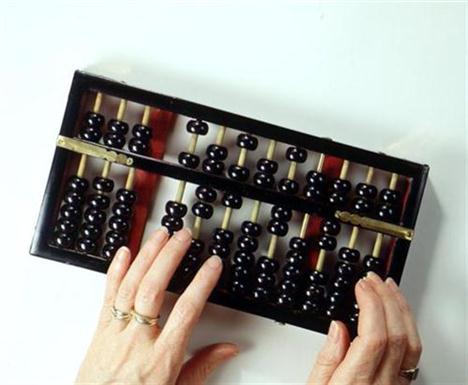
Abacus is the oldest calculating and counting device. Its origin dates back to 2700 – 2300BC in the Sumerian times. However, abacus as we know today was invented by Chinese during 2nd century BC. It is also referred to as counting device that has been used in Asia and Africa for arithmetical calculations.
The development of abacus can be classified into three stages namely Ancient Age, Middle Age and the Modern Age. Prior to the invention of abacus, Inca Empire had developed a counting system called Quipu. Simplest and oldest counting methods of ancient times included drawing lines in the sand and using fingers.

The Abacus was constructed with stones and beans that were moved on a table of wood, metal or stone. The beads were switched from vertical counting to horizontal counting. The major benefit of this counting device was that these beans could be moved without interrupting the calculation. Later the device was constructed with bamboo frames with colourful beads and pebbles. The oldest counting board could not be used for a long time because they were designed with perishable materials.
Before the adoption of modern numeric writing system, abacus system of counting was widely used by traders, merchants and clerks in Asia and Africa. The usage of abacus began to diminish when the arithmetic counting using writing the numbers gained popularity in the later part of middle ages. The person who uses an abacus is called an abacist.
Related Articles:
- No related posts
Who Invented Calculus
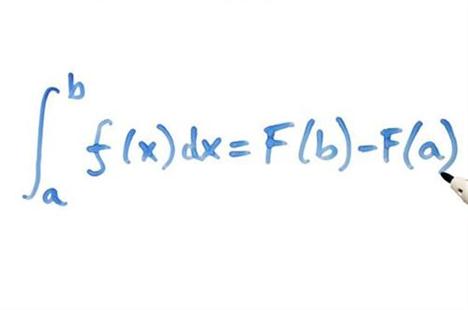
The vast history of calculus has its history that goes back to 1820 BC. Egyptians had calculus but did not know the exact formulas, some of which are today considered invalid. Later on Archimedes developed the study of limits which was earlier studied by Greek mathematician Euxodus. The formulas for finding the areas of geometrical shapes were later developed in countries like China in 3rd century AD. The history of derivative came in 12th century when Bhaskara II from India developed the use of infinitesimal change. This was later known in modified terms as the Rolle’s teorem.
Issac Newton’s contribution to physics and mathematics is vast and calculus is one of them. He not just gave the chain and the product rule; he also focused his study on the use of higher derivatives. Gottfried Wilhelm Leibniz is a popular mathematician who made calculus as systematic as it is today. His contribution in spelling out the exact rules of calculus was as significant as Newton’s application of calculus in mathematics and physics. A debate on the title of the inventor of calculus went on for long. However both are considered as the inventors of calculus in own right as their approaches were much different.

Related Articles:
- No related posts
Who Invented Boolean Logic
Boolean logic was first invented 19th century by George Boole after whom the branch is named. Boolean logic is considered as the main base for computer digital logic and has paved way for information technology. He is known for his statement where he said that no general method for solution of probability can be established which doesn’t recognize the universal laws of thought. According to him the laws of thought form the basis of all reasoning.
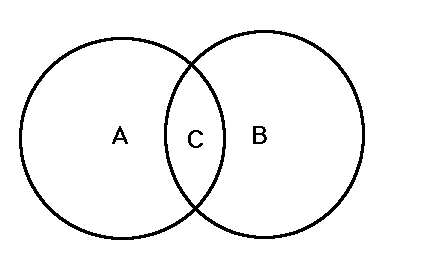
The logic of Boolean algebra as invented by Boole consists of only two possible outcomes of a problem. The outcomes are either written as ‘true or false’ or ‘1 or 0”. The three operations that are common are “and”, “or”, “not”. There is a lot of similarity in Boolean algebra and sets in terms of logic. Computer languages and relational databases too use Boolean algebra to some extent. It’s used to combine tables in database and is known as a “join” in the database. It is also a part of algebraic course in high schools and colleges and is studied by mathematicians all over the world. George Booles theory and research on the subject was published in the year 1847 in the name of “The Mathematical Analysis of Logic.”
Related Articles:
- No related posts
Who Invented Astrology
Astrology is an ancient science which was originated by the Babylonians and its use can be dated back to as early as 3000B.C. The term ‘astrology’ is a Greek word literally meaning ’Science of the Stars’. The Babylonians applied this science to predict future events such as wars, metrological conditions, famines etc. It is believed that they were the first ones to notice how the position of the sun influenced the seasons and the agricultural cycles.
Babylonians also made use of calculations and mathematical means for making future predictions. This system proved to be very effective in making natal horoscopes and related predictions. The Babylonian studies regarding astrology later spread out and gained acceptance in the Middle East, India, China and other parts of Asia.

The Greeks added their own concepts and improvised upon the early systems of astrology formulated in Babylon. In fact the Greeks were the first ones to create horoscopic astrology and to introduce the study of the position of the sun and planets in order to determine the future course of one’s life.
The evolution of astrology till date has been long and varied. However it is as relevant in the modern times as it was before. It is therefore relied on extensively by people from all walks of life for guidance on various domains such as business, marriage, health etc.
Related Articles:
Who Invented Algebra
Algebra is the major branch of mathematics that deals with study of operations and relation, construction methods, concepts, polynomial equation and much more. A mathematician named Al-Khwarizmi invented the algebra. He wrote about algebra in one of his books in the year 820.
The term algebra has been derived from the Arabic word Al-Jabr, which means equation and was the title of inventor Al-Khwarizmi’s book. He was the first person who has solved the difficult quadratic equations by using his techniques. The equations solved by him include the linear equation, linear intermediate equation, second order intermediate equation, etc. These equations solved by him are still in use. He also availed the credit of teaching the algebra in an elementary form. He was rewarded by being named the ‘father of algebra’.

Algebra at elementary stages is recognized as a part of curriculum of secondary level education. Algebra at higher education is much broader in scope and more advanced than the lower level of basic algebra. Today algebra has become a very significant and important part of pure mathematical study which includes geometry, topology, number theory and analysis, etc.,
The basic concept of algebra includes addition and multiplication and it is reflected in several structures namely rings, fields and groups. The study of these structures in mathematics is referred to as abstract algebra.
Related Articles:
Who Discovered Potassium
Potassium is represented by the symbol K, from the Latin word kalium. Its atomic number is 9. Potassium was first derived from potash.
It is quite easy to spot natural potassium because it is soft and silvery. It is an alkali metal that rusts fast when exposed to air and water. Potassium is found in nature as ionic salt. There is a large amount of potassium in seawater. Minerals have potassium, too.The cells in our body need Potassium to work well. Potassium is therefore found in animal and plants tissues. Potassium and sodium are the same but they have different roles in plants and animals.
The discovery of potassium
Potassium was not known even in Roman times. It got its name from potash, an English word that meant an alkali cooked in a pot from the ash of burnt wood. Potash was largely unknown then. It later turned out that potash is mainly potassium carbonate. When potassium carbonate is heated, carbonate frees itself from carbon dioxide. What remains is caustic potash. Caustic potash can burn your skin.

Sir Humphry Davy of England discovered Potassium in 1807. He did it by splitting potassium from molten potash and separating sodium from salt. Sir Humphrey Davy noted that when potassium is thrown into water, it makes a hissing sound and burns with a purple light. He later presented his discovery at a lecture.
Potassium and alkali metals
Potassium is silver white in color. It resembles Group 1 alkali metals. More than that, Potassium is more reactive than sodium. It easily combines with oxygen so it should be stored under kerosene or a hydrocarbon. Potassium ignites with water to form potassium hydroxide. Potassium also combines fast with halogens, sulfur, and other non-metallic elements.

Commercial uses of potassium
Potassium metal has few uses because it is similar to sodium. Sodium is cheaper than potassium. But potassium compounds are widely used for industrial purposes. Potassium carbonate is used for making soap and glass products. Potassium chloride is used for making fertilizers while potassium chlorate is used for making explosives, firecrackers, and matches.
The potassium used to make soap comes from lye. Water is dripped through ashes of wood for a number of hours. The liquid that gathers after that is lye. Potassium salts are dug in Germany and United States of America. 2.4 % Earth’s total weight is made up of potassium.
Health benefits of potassium
Avocados, beans, potatoes, bananas, and watermelon are rich sources of potassium. Potassium helps in buffering a potential cardiac arrest. It also lowers blood pressure, sharpens brain function, and balances body fluids. People who lose too much water through diarrhea can be relived by taking potassium-rich foods.
Potassium in other commercial products
Potassium is present in cigarette wrapping as Potassium nitrate KNO3 otherwise known as saltpeter. This substance keeps the cigarette burning as soon as it is lighted. Gunpowder and guano have considerable amounts of saltpeter in them. Matches, fireworks, and flypaper contain Potassium chromate (K2CrO4). Potassium sodium tartrate (KNaC4H4O6) is the silvery-white tinge in the back of mirrors that catches light and allows mirrors to reflect.
Related Articles:
Who Discovered Pi
Pi is a strange number. It is an irrational yet real number that is equal to 3.14159. According to Euclid, 3.14159 is the ratio of a circle’s circumference to its diameter. No matter how many decimals you bring Pi to, it never repeats a number sequence.
Earliest calculators of Pi
Pi has been known and used for thousands of years. The ancient mathematicians of Babylon were using Pi as early as the 19th BC. Pi’s value at the time was equal to 25/8. It was pretty close to Pi’s real value by 0.5 %.
On the other hand, the ancient Egyptian scholar named Ahmes wrote the oldest value for Pi. He calculated Pi to be 256 divided by 81 or 3.160. Ahmes claimed to have found that equation in a papyrus from the Middle Kingdom.
Aryabhata was an Indian astronomer and mathematician who lived in the 5th century BC. He calculated the value of Pi as equivalent to 62832/2000, or 3.1416. He got it correct when the figure was rounded off to four decimal places. Aryabhata did not ever say he was absolutely correct. He was humble enough to say his was merely an estimate.

In the far east, a Chinese mathematician calculated the value of Pi between 3.1415927 and 3.1415926. Zu Chongzhi came up with two close estimates, 355/113 and 22/7, around the 5th century. About that time, too, Liu Hui computed ? to be 3.141014. He believed Zu Chongzhi and Aryabhata’s values did not much vary. Lui Hui said that 3.14 was a reliable and logical value.
Back in India, Madhava from Sangamagrama came up with the value of Pi when he changed the power series of Pi /4 into the equation. Then, he used the first 21 numbers of the sequence to solve for a logical estimate of Pi. He got it correct up to 11 decimal places. When he added a remainder term to the original number sequence, he was able to solve Pi correctly up to the 13th decimal places.
Two hundred years later, a Persian astronomer named Ghyath ad-din Jamshid Ksahani computed Pi correctly up the 9th digit in the base of 60. It was equivalent to 16 decimal digits.

Biblical references to Pi
It may sound far-fetched but the Bible mentions Pi. In 1 Kings 7:23, the Gospel says that the measurements for a round basin have a 30 cubit circumference and 10 cubit diameter. Rabbis would say that this computation is based on the circumference of the brim and the diameter from the outside across. When computed, the value would be close to 3.14.
Archimedes’ Experiment
Archimedes of Syracuse, Greece, is the widely recognized mathematician behind the correct value of Pi. He lived between 287-212 BC. He came up with the figure by studying the perimeters of a polygon with 96 sides, drawing a circle and being drawn by it in return. When he computed the average of the two values, he came up with 3.1419.
Pi is a very common figure in mathematics. What is strange is that it sometimes appears in an equation where it is not needed.
Related Articles:
Who Discovered Magnets
Magnets are magical objects that can hold things together without hands. It is because a magnetic object has a magnetic field. The field attracts metallic bits and pieces such as pins, clips, hair, and a host of others.
Who discovered magnets
As to who discovered magnets first, it looks like the ancient Greeks are the strongest contenders. It is said the Greeks first observed lodestone attracted iron bits. Another version of the story goes that the Greeks discovered magnetites in Turkey.

Thales is widely accepted as the first human to study magnets. He lived in Greece around 600 BC. He studied how two magnetic objects attack each other, including a resin called amber. On the other hand, ancient Chinese had been known to use magnetic stones around that time, too. Historians say the ancient Chinese used magnetic stones for making a compass.
Another story is told about an ancient t place in Macedonia called Magnesia, where magnets appeared to have begun. But the Vikings, who sailed across many oceans, invented the first magnetic compass.
In 1734 a Swedish scientist named Swedenborg brought to polar attention the differences between a magnetic object and a non-magnetic one. The first magnetic substance ever known was magnetite. But Swedenborg was challenged by a Frenchman named Louis Neel. He thought otherwise and came up with a theory on ferromagnestism.

Types of magnets
There are five different general kinds of magnets: lodestone, bar, button, horse, and ring. They obviously have different sizes and shapes. Others are made or iron, while other are made of rock, like the lodestone.
Uses of magnets
Magnets changed the way we live. It has made our lives easy and comfortable. Magnets are used in making electric motors, TV sets, computer monitors, microphones, speakers and a whole lot more. In sea navigation, the magnetic compass keeps the ship right on track. Tools and jewelry have magnets in them.
Even up to this day the CHinese use magnets for healing, which they call magnetic therapy. The ancient Hindus and Egyptians used lodestones to cure certain diseases. The Romans, meanwhile, would catch electric eels to cure gout and arthritis. In the Middle Ages, alchemists claimed they could cure baldness, sadness, and arthritis with the use of magnets.
Your TV set has magnetic chips in the cathode ray tubes. A magnetic field is formed when the tubes’ electron gun blasts electrons into the screen. Thus, you can see images. A computer disk is coated with iron that creates magnetic field with certain patterns. This allows the disk to store information.
In transporation, magnets are put on a bullet train’ tracks. There is a magnetic field that works on the underside of the train to make it “float.” This has been widely used in Japan, China, Korea, and France.
Everywhere you go today you would need to have an ATM card or a credit card. These cards have a magnetic strip that allows you to process a transaction, whether to get cash or ask about your standing balance.
Indeed, magnets are indispensable in our lives today.
Related Articles:
Who Discovered Hydrogen
Hydrogen is found all throughout the universe. It is very flammable and is also found in most life forms, especially plants. We consume daily doses of hydrogen through water and food.
Who discovered hydrogen
T. Von Hohenheim is widely credited as the discoverer of hydrogen gas (H2) in the 15th century. Von Hohenheim accidentally discovered hydrogen by mixing acids and metals. He did not know for sure that the two would produce a new chemical element. It would take Robert Boyle to detail the reaction between acids and metals. He made this observation in 1671. The first to recognize hydrogen as a distinct substance was Henry Cavendish. In 1766, he discovered that the gas produced from a metal and acid reaction was highly inflammable. He later found out that hydrogen turned into water when burned.
Quite unlike T Von Hohenheim, Cavendish discovered hydrogen while experimenting with mercury and acids. Antoine Lavoisier repeated Cavendish’s experiment in 1783. This time he named the element hydrogen.

Uses of hydrogen
Hydrogen has very specific uses because it is dangerous. In the old days it was used to lift aircrafts such as balloons and zeppelins. But once up in the air balloons would burst, so hydrogen was replaced with helium for safety. Hydrogen is very volatile.
In welding hydrogen is used as a shielding gas since it keeps the weld free from oxygen and nitrogen. Liquid hydrogen is a lot colder than 14 Kelvin, so it has much use in superconductivity and cryogenic freezing. Isotopes of hydrogen are used for making nuclear reactors. Other hydrogen isotopes have uses in making luminous paints and hydrogen bombs.

While some quarters argue that hydrogen may be safe to use as clean fuel, it is still subject for confirmation. In fact, using hydrogen as fuel means consuming huge amount of fossil fuels.
Manufacture of hydrogen
Hydrogen is mass produced through steam reforming and electrolysis. While the latter process is environmentally safe, it remains very expensive. Steam reforming may be cheaper but it contributes to greenhouse effect. In the United States alone, some 9 million metric tons of hydrogen is made yearly.
Other commercial uses of hydrogen
Processing food is not possible without the use of hydrogen. The space shuttle loads up hydrogen before it flies into orbit. Our cell phone and laptop computers have hydrogen-fueled batteries, but in fossil form. It has been proved that hydrogen fueled power plants can supply electricity even at the onslaught of natural disasters like hurricanes and earthquakes.
On the other hand, cars running on hydrogen fuel can cut greenhouse effect. More than that, hydrogen comes in very handy as it can be stored in a pressurized tank. Today hydrogen is not too rare to find: It can be formed from liquid fuel, such as natural gas or methanol. This is made possible by a reformer. The technology, however, is at its infancy stage.
Finally, cars using a reformer may fume out noxious wastes, but they may be too petty compared with those coming from regular combustion engines.
Related Articles:
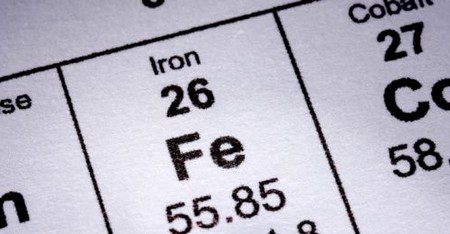
Who Discovered Iron
There is evidence that we have been using iron for the last 5000 years. Iron is found anywhere in the planet. It is also the cheapest metal. Iron comes from minerals called hematite and magnetite. Iron can also be found in other minerals such as taconite, siderite, and limonite.
Where did iron come from
It is widely believed iron came into the Earth along with meteors. The meteor-borne iron contained about 8% nickel. Evidence of man-made iron was traced as far back as 2500 BC. Bur iron-making did not become widespread until 1200 BC. In the old days iron was used mainly for making trinkets and beads. In order to do that, ancient people had to forge iron at temperatures above 1100 C.
The earth’s surface is made up of about 5.6% of iron. Strange but true: Earth’s core is the richest source of iron.

Early uses of iron
Hematite, an oxide of iron, was widely used by ancient cultures for beads and ornaments. They did that by reducing carbon. However, if reduced at temperatures below 700-800 C, iron is not suitable for forging and must be produced at temperatures above 1100 C. Wrought iron was the first form of iron known to man. It is hard to believe that hundreds of years ago iron was far more expensive than gold.
The use of iron led to the invention of weapons and farming tools. Iron plays a major role in architecture. The oldest standing iron pillar is found in India. The pillar dates back to 400 AD. It is surprisingly almost rust-free. Iron is not found in its pure state. But in Greenland iron is found as lumps in basalt.
Today we know seven kinds of metal: iron, mercury, gold, lead, copper, and tin. Bronze and electrum are considered alloys, or half metals.
Other uses of iron
Iron is made into steel. Steel contains about 0.3 %-1.5% carbon. Other elements combined with iron become useful. When iron is combined with, it does get rusty easily. When iron is combined with nickel, it does not give out to heat and acid. Iron is also used to make buildings, furniture, bridges, computer parts, paper clips and many others.

Cast iron is used to make kitchen utensils such as cooking pans, ovens, trays, and other ware. To make steel, iron must combine with an alloy and carbon. Steel usually contains between and 0.3 % to 1.5% carbon.
It is widely known that iron helps keep animals and plant alive. Iron has a role when plants make chlorophyll. Iron is present in hemoglobin. Iron sulfate is used to treat anemia.
Iron and human health
There are two kinds of iron found in our food: heme iron and non-heme iron. Heme iron comes from fish, red meat, and eggs. The richest source of iron is the liver. Heme iron is better absorbed by the body than non-heme iron. Non-heme iron is found mainly in cereals, raisins, and deep green vegetables.
Iron is vital to the muscles. A lack of iron results in weakness of the body and mind. Our body stores 10 % of all iron taken from foods.
Related Articles:
« Previous Entries