Articles


Subscribe to RSS feed

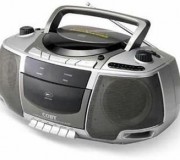
Who Invented the Cassette Player

The invention of cassette player first originated when magnetic storage for audio was introduced by Oberlin Smith in the year 1888. Ten years later, Vlademar Poulsen brought some practicality to this concept. The first magnetic tape came into the market in 1928 and was invented by Fritz Pfleumer. The first consumer usable cassette player came into the market in the year 1963. Audio company Philipps introduced it in Europe and later in United State as the compact Cassette.

Later on Sony came up with its Walkman series and made cassette players hugely popular among the masses and the classes. While initially cassettes were used for personal recording, Mercury Record Company came with 50 titles and thus magnified the use of cassettes. Many companies later joined the market and competition increased the features of cassette players. There were major inventions and innovations that made cassette players extremely user-friendly and compact. Every audio recording, movies and albums started being available in cassettes. Even today many companies still use cassettes to bring new albums in the market. In recent years, the cassette industry has faced tough competitions from CD players. While CD players are much more compact and are excellent for mass storage, cassette players have a certain nostalgia attached to them.

Who Invented the Cassette Player

Related Articles:

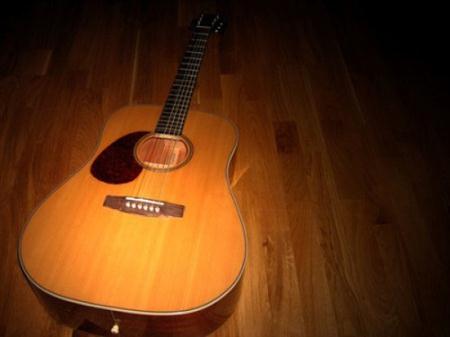
Who Invented the Acoustic Guitar

An acoustic guitar is a common type of guitar that projects the sounds produced by the strings of the guitar only by using acoustic methods. The string based acoustic guitar was invented by Christian Fredrich Martin from Germany. He was a guitar maker who moved from Germany to America in the year 1833. At that point of time, American guitarists required a bright sounding and louder guitar so he fulfilled the same by inventing the acoustic guitar. These guitars completely vary from an electrical guitar.

Acoustic guitars can be classified as historic acoustic guitars and modern acoustic guitars. Both these types of guitars tremendously vary in construction and design. The common varieties of acoustic guitar include steel-string acoustic guitar, lap steel guitar and nylon string classical guitar. These guitars are designed in different body shapes. The proportion and the size of the tonal balance in upper part and lower part determine the volume of the sound, i.e. the larger the size of the body, louder will be the volume.

Who Invented the Acoustic Guitar

Martin experimented with the strings on the guitar and identified that the guitar required strong body due to the higher tension on the guitar. He designed a vigorous bracing system that coordinates with the increased tension of steel strings on the guitar. Most of the modern acoustic guitars based on strings are constructed based on the bracing concept developed by Martin.

Related Articles:

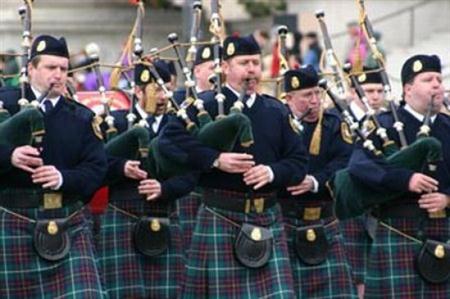
Who Invented Bagpipes

There has always been a speculation on whether the Bagpipes bear a Scottish origin or an Irish origin. However, the Bagpipes are neither the legacy of the Irish nor the Scottish. The bagpipes were invented in the middle-east. The Old Testament has references of the instrument being played to call upon the people for worship. There are indications of this event taking place in Iraq, which was then a part of the Babylonian empire.

The bagpipe travelled along with the migrating tribes from Middle East to Europe, Asia and some parts of Africa. The bagpipes were very popular across Europe around two hundred years back. The ruling class started forbidding use of the instrument around that time labelling it as a ‘poor man’s instrument’. The bagpipe was hence forbidden in Europe except for a few places like Scotland and Bulgaria.

Who Invented Bagpipes

However, the bagpipes have recently found recognition in modern music and are being played by many musicians across the world. Not only are many people playing the bagpipes today, but many are also building modern bagpipe models. The portraits made by modern painters depicting the Bagpipe being played in the 16th century has contributed in a big way to the revival of the instrument.

Related Articles:

Who invented Opera

Opera is a form of stage musical, quite different from typical Broadway musicals, and is often considered more cultural because it incorporates classical music and period costumes. Despite the use of classical orchestras, and a distinctive style of singing, opera actually describes a type of stage drama where singing is the main method of delivering lines instead of the more usual method of speaking a part.

The renaissance era in Europe, especially in Italy, was when opera was first developed. Renaissance society was rediscovering many of the artistic highs of ancient Greek and Roman literature, poetry, art, sculpture, even philosophical thought, most of which had been forgotten for over a thousand years as Europe experienced the dark ages and then settled into the medieval ages.

Opera Masks

Florence, one of Italy’s leading centers of enlightenment, was the setting for regular meetings of the Florentine Camerata under the leadership of Count Giovanni de’Bardi during the second half of the 1500s, who were determined to revive classical Greek drama and music. These leading men of Florence would interpret and read the classics, and came to the conclusion that Greek drama was probably sung instead of spoken.

Girolamo Mei, a music historian of the era considered that some of the parts of Greek drama needed to be sung if they were to be heard over the sound of the instruments he believed would have been played in he background. The ancient Greeks may have sung small parts of their dramas, but modern historians now agree most Greek drama was spoken. In any event, Mei and the Florentine Camerata developed a new style of drama with parts being sung to accompaniment by a chamber orchestra.

Lei rarely attended the meetings of the Camerata, but wrote profuse notes to Vincenzo Galilei, a member of the Camerata and also a celebrated lutist in Florence. Galilei first put classical Greek poetry to music in a style known as the recitative. Several other members of the Camerata were also musically minded so Galilei shouldn’t be considered the only person of the Camerata to have created the new style.

Sydney Opera House

The first drama to music that modern opera enthusiasts and historians consider to be opera as we know it today was composed by Jacopo Peri in 1597 entitled Daphne. Peri’s first opera hasn’t survived thru the ages but his second opera Euridice, first performed in 1600 has, Peri was the first composer to create a completely new drama set to music in the new opera style, and for this is credited with the invention of opera.

Sadly, Peri was quickly eclipsed by a younger generation, of whom Claudio Monteverdi was considered the composer to be watched and emulated, and many people who don’t know of Peri often incorrectly describe Monteverdi as the inventor of opera. In fact his style was so different from Peri, and still very much appreciated even in the 21st century, that perhaps the honor does belong to him, whereas Peri’s music is considered quite rough, and lacking finesse compared to his successors.

Learn about the complete history of opera.

Related Articles:

Categories