
22
2011
Who Invented the Atomic Clock
 An article by
The idea of the atomic Clock was first proposed in the year 1945 by a physics professor of the Columbia University named Isidor Rabi. He suggested that a clock could be devised using a technique known as the atomic beam magnetic resonance which he had developed in the 1930s.The world’s first atomic clock which utilized the vibrations of ammonia molecules was subsequently introduced in the year 1949 by the National Bureau of Standards (NBS).
Later in the year 1955, the first cesium-beam atomic clock was built by the National Physics laboratory of England. The cesium-beam atomic clock uses the frequency of the microwave spectral line radiated by the cesium atoms as reference. This accounts for the high level of accuracy of the cesium-beam atomic clock. It is estimated they gain or lose less than one second in three million years.
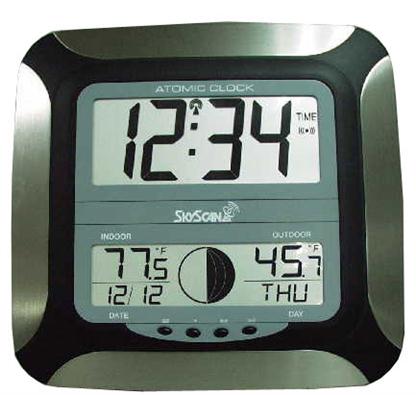
Many standard laboratories around the globe maintain atomic clocks. These laboratories broadcast highly accurate time signals across the world by the means of shortwave-radio broadcast stations or by artificial satellites.
There is a variety of different types of atomic clocks available today. The principle behind all the various types of atomic clock remains the same; the only difference is related to the element used. The Rubidium atomic clock is the most compact and simplest of all atomic clocks. Cesium atomic clock is extremely accurate and commercially successful too .
Related Guides


