
3
2009
Who Discovered the Mitochondria
 An article by
Mitochondria are the powerhouse of the cell. You can say supplies electricity the cell. Mitochondria are organelles in the cells that have special functions: They make ATP (adenosine triphosphate) that keeps the cells in good running condition. Other than that, mitochondria are responsible for cell reproduction and cell death.
Earliest studies on the mitochondria
The first recorded study ever made in the mitochondria was made by Richard Altman in 1840. He came to know about them and called them bioblasts. Carl Benda coined the word mitochondrria in 1898. He got it from the Greek word mitos, meaning thread, and chondros, meaning granule.
Albert von Kolliker discovered the existence of mitochondria around 1857. He was studying human muscle cells when he noted strange granules in them.
Discovery of mitochondria functions
Over the next few decades more scientists took the mitochondria seriously. By and large each one of them had his own contribution to the field. Some focused on mitochondria’s functions, some on their structures. One important name in mitochondria’ science is Otto Heinrich Warburg. He initially proposed that a special enzyme within the cell helps in the making of oxygen. When he used cyanide on the cells, it had an effect right down to the minutest level. In later years he was able to come up with a cure for cancer (cesium chloride). But he was called names by the scientific community.
More research on the mitochondria was undertaken by David Keilin in 1923. He probed how electrons changed inside cells while in the process of oxidation. For his part Keilin discovered the inner membrane of mitochondria, which he called cytochrome C.
Six years later, C.H. Fiske and Y. Subbarow successfully isolated mitochondria’s ATP. Soon after more related experiments were made by H.M. Kalckar and V A Belitser. They proved how cells “breathe” better when added with phosphate and protein. Cells breathe when they get oxygen from the blood. Fiske and Subbarow later called this process as oxydative phosphoryaltion.
By the 1950s studies on mitochondria were going full swing. This time more attention was given to their functions. These were successfully observed by Eugene Kennedy and Albert Lehnigher. Peter D. Michell came up with a theory which he aptly called “chemiosmotics” from his studies on mitochondria membranes. He proved that during cell respiration, hydrogen ions spread across mitochondria’s membranes and that they actually convert food into ATP to make energy.
Paul Boyer discovered the mitochondria’s role in making ATP from inorganic phosphates. For that he won the Nobel Prize in 1997.
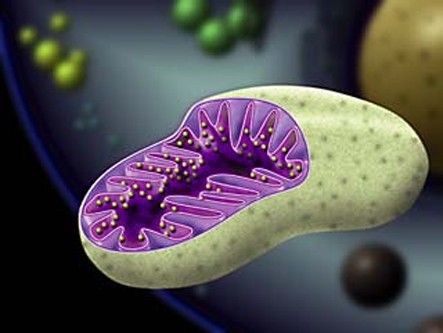
Mitochondria’s outer and inner structure
There are membranes outside and inside the mitochondria. The outer layer is thick and full of proteins. It allows only small molecules. Mitochondria’s inner membrane has folds called cristae. Moreover, the inner membrane has an enzyme that helps the cell to make ATP. This enzyme is known as the matrix.
Mitochondria and modern medicine
Knowing mitochondria’s structure helps scientists know more about the DNA. Experts believe there is a link between DNA and mitochondria. DNAs with defective mitochondria, for example, give doctors a clue what diseases a certain person is prone to.
Related Guides


