
9
2009
Who invented the Airplane
 An article by
Human flight has been the dream of so many since probably before civilization was invented. The airplane, a fixed wing vehicle capable of controlled flight like a bird, able to take off, maneuver through air currents in any direction, and then land at will safely again, that has been the challenge, and it was the first flight of a heavier than air airplane that finally decided the name of the inventor of the airplane.
As long ago as the 10th century in Islamic Spain, a scholar named Abbas ibn Firnas, born in Ronda, but who found favor in Córdoba, at that time the world’s most enlightened city, and quite possibly it’s largest too, invented a set of wooden wings covered with bird feathers, and then jumped from the tower of Córdoba’s great mosque, and successfully managed to glide to the base although his landing jarred his spine. Despite only gliding a short distance, history has been kind to ibn Firnas and he is recognized as the first human to successfully fly.
Of course gliding from a tower to the ground is a very different thing from taking off on flat ground with enough power to attain powered flight, and the next person to give serious thought to how this might be possible was Leonardo da Vinci who secretly designed a vehicle that today reminds us of a corkscrew with a seat suspended to it’s side. Modern scientists have computed the odds of da Vinci’s flying machine being able to fly as quite high, though sadly da Vinci’s machine was never built.
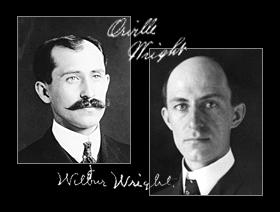
In the early 1900s Wilbur and Orville Wright, inspired by the efforts of Otto Lilienthal and Percy Pilcher, pioneers of 19th century gliding, the Wright Brothers set about designing an airplane that would give them complete control over flight rather than just rely on following the direction of the wind. In 1903, the Wright Brothers successfully tested their airplane and flew for 12 seconds, but by the end of that same day had increased this to 59 seconds and over 850 feet of flying, although their height above ground never increased beyond about 10 feet.
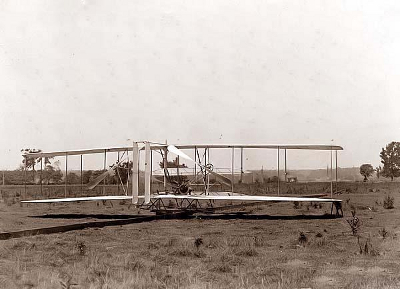
Controversy surrounds the Wright Brothers claim to have invented the airplane, with many flight historians claiming their achievements were remarkable, but were nothing more than gliding and shouldn’t be considered the first true flight. Instead, Alberto Santos-Dumont, a Brazilian living in France is considered by many as the inventor of airplanes for successfully flying a proper fixed wing plane in 1906.
Others dispute both the Wright Brothers or Santos-Dumont as the first to fly, and point to Clement Ader of France who was witnessed flying a plane he named Eole in 1890. His first flight only managed a height of 12 inches and a distance of 50 meters, but by 1892 this had been improved to over 200 meters distance at a height of 2 feet. Consensus seems to favor the Americans, Wilbur and Orville Wright as being the first to fly, but the argument will probably never be settled.
Related Guides


